Email Monitoring Tools: A Complete Guide to Protecting Your Email Ecosystem

Quick Answer
Email continues to be one of the most essential communication channels for businesses—but it’s also one of the most targeted by cyber threats. From phishing attempts to domain spoofing and deliverability issues, organizations face constant risks that can damage both security and reputation.
Email continues to be one of the most essential communication channels for businesses—but it’s also one of the most targeted by cyber threats. From phishing attempts to domain spoofing and deliverability issues, organizations face constant risks that can damage both security and reputation.
This is where email monitoring tools come in. These platforms provide visibility into how your email systems operate, helping you detect threats, ensure compliance, and improve overall performance.
In this guide, we’ll explore what email monitoring tools are, why they matter, and the different types available today.
What Are Email Monitoring Tools?
Email monitoring tools are software solutions designed to track, analyze, and secure email activity across an organization. They help businesses observe everything from authentication performance to user behavior and email delivery patterns.
Rather than focusing on just one layer, modern monitoring tools provide insights across multiple areas, including:
- Email authentication protocols
- Security threats and anomalies
- User interactions and productivity
- Infrastructure performance
By consolidating this data, organizations gain a clearer understanding of how their email environment functions—and where vulnerabilities may exist.
Why Email Monitoring Is Important
Email monitoring is no longer optional. With cyberattacks increasingly targeting email systems, organizations need proactive visibility to stay protected.
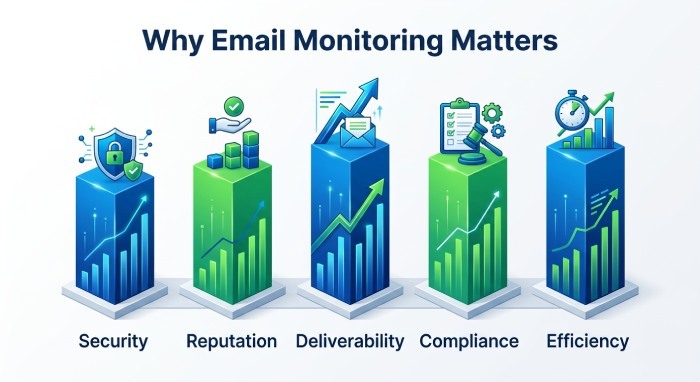
Here’s why these tools are critical:
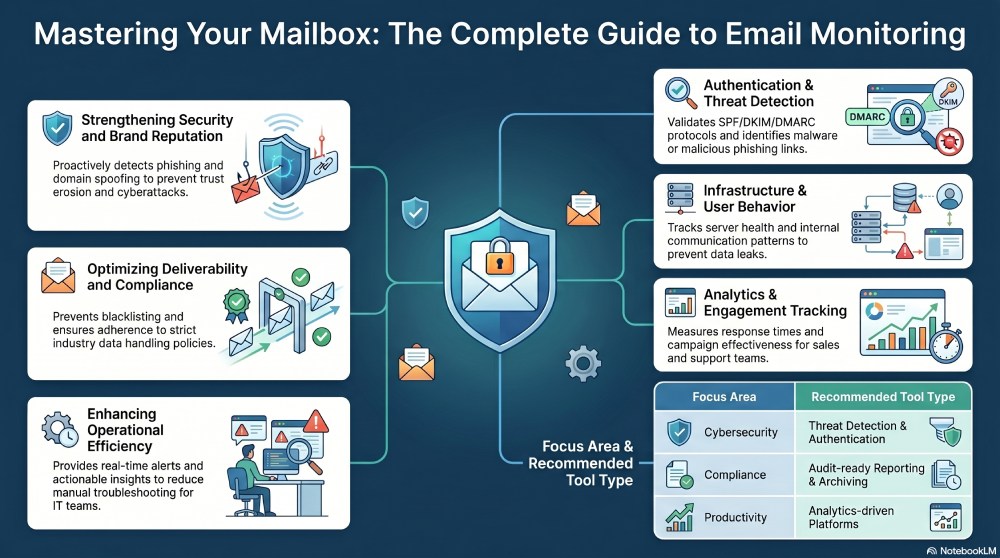
1. Strengthening Security
Monitoring helps detect suspicious activities such as spoofing, phishing attempts, or unauthorized sending sources before they escalate.
2. Protecting Brand Reputation
If attackers misuse your domain, it can erode customer trust. Monitoring tools help identify abuse early and prevent long-term damage.
3. Improving Deliverability
Issues like misconfigured authentication or blacklisting can prevent emails from reaching inboxes. Monitoring ensures smooth delivery.
4. Supporting Compliance
Many industries require strict data handling and communication policies. Monitoring tools help maintain compliance and audit readiness.
5. Enhancing Operational Efficiency
With actionable insights and automated alerts, teams can resolve problems faster and reduce manual troubleshooting.
Types of Email Monitoring Tools
Email monitoring solutions vary widely depending on their purpose. Below are the major categories:
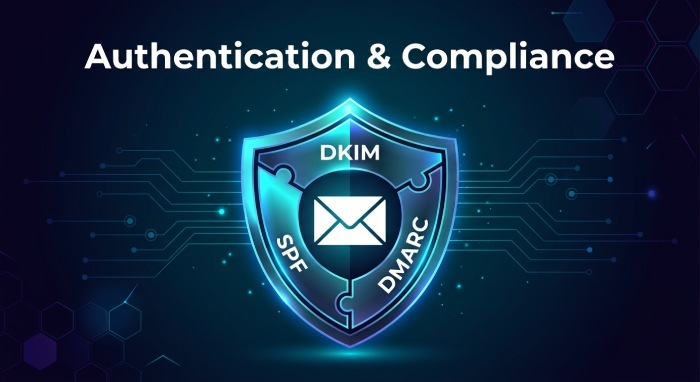
1. Authentication and Compliance Monitoring
These tools focus on verifying and tracking email authentication standards such as SPF, DKIM, and DMARC. They provide visibility into who is sending emails on behalf of your domain and whether those messages are properly authenticated.
They are especially useful for preventing domain impersonation and ensuring compliance with modern email security requirements.
Some platforms also convert complex authentication data into easy-to-read reports, making it easier for teams to identify misconfigurations and enforce policies.
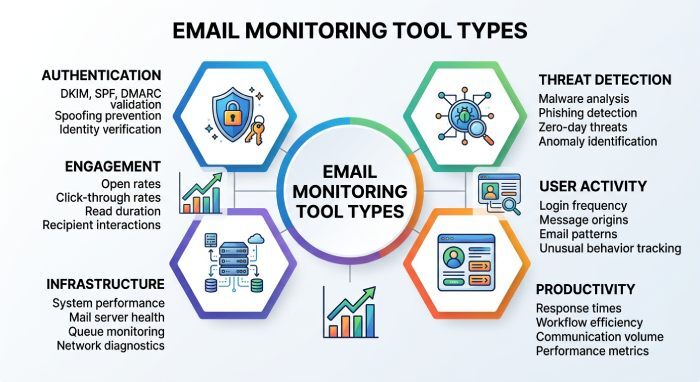
2. Threat Detection and Email Security
Security-focused monitoring tools analyze incoming and outgoing messages to identify malicious activity. They often use advanced techniques like behavioral analysis and threat intelligence.
These tools can detect:
- Phishing attempts
- Malware attachments
- Suspicious links
- Insider threats
They are typically used by enterprises that require strong, layered protection against evolving cyber risks.
3. User Activity and Behavior Monitoring
Some tools focus on how employees use email within an organization. They track communication patterns, detect unusual behavior, and help enforce internal policies.
This category is particularly valuable for:
- Preventing data leaks
- Monitoring compliance with company policies
- Investigating insider threats
4. Email Analytics and Productivity Tracking
These tools provide insights into email usage and team performance. Instead of focusing on security, they help businesses understand communication efficiency.
Typical features include:
- Response time tracking
- Email volume analysis
- Workload distribution insights
- Team performance metrics
They are widely used by customer support and sales teams to improve responsiveness and productivity.
5. Infrastructure and System Monitoring
Infrastructure-focused tools monitor the technical backbone of your email system. They track server health, uptime, and performance metrics to ensure smooth operation.
They can help identify:
- Server outages
- Latency issues
- Delivery delays
- Configuration errors
This category is especially important for IT teams managing large or complex email environments.
6. Lightweight and Engagement Tracking Tools
These are simpler tools designed for tracking email engagement rather than security or infrastructure.
They typically offer features like:
- Email open tracking
- Link click tracking
- Basic analytics
These tools are commonly used in marketing and sales to measure campaign effectiveness.
Key Features to Look For
When selecting an email monitoring tool, it’s important to consider your organization’s needs. However, some features are universally valuable:
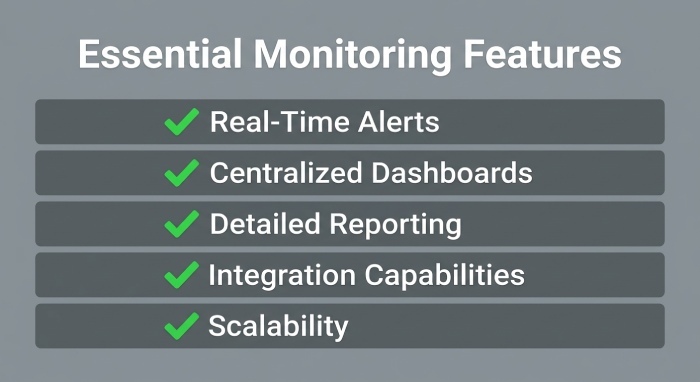
- Real-time alerts: Immediate notifications for critical issues
- Centralized dashboards: A unified view of email activity
- Detailed reporting: Clear insights into trends and anomalies
- Integration capabilities: Compatibility with existing systems like SIEM or CRM
- Scalability: Ability to grow with your organization
Advanced tools may also include automation, AI-driven insights, and customizable monitoring rules.
How Email Monitoring Works
At its core, email monitoring involves collecting and analyzing data from various parts of the email ecosystem.
This may include:
- DNS records and authentication results
- Email headers and delivery logs
- User interaction data
- Threat intelligence feeds
The tool processes this information and presents it through dashboards, alerts, or reports. This enables teams to quickly identify issues and take corrective action.
For example, monitoring systems can continuously check domain and IP reputation against blocklists and send alerts if problems arise—helping prevent deliverability failures.
Choosing the Right Tool for Your Needs
There is no one-size-fits-all solution. The right tool depends on your priorities:
- For security: Choose threat detection and authentication-focused tools
- For compliance: Look for detailed reporting and audit capabilities
- For productivity: Opt for analytics-driven platforms
- For IT operations: Focus on infrastructure monitoring tools
Many organizations combine multiple tools to cover all aspects of email monitoring.
Final Thoughts
Email monitoring tools have become a cornerstone of modern digital security and communication management. They provide the visibility needed to protect against threats, maintain compliance, and ensure reliable email performance.
As email-based attacks continue to evolve, relying on reactive measures is no longer enough. Proactive monitoring allows organizations to stay ahead of risks, safeguard their domains, and maintain trust with their audience.
Investing in the right monitoring solution isn’t just about security—it’s about ensuring your entire email ecosystem operates smoothly, efficiently, and securely.
Topics
General Manager
General Manager at DuoCircle. Product strategy and commercial lead across the email security portfolio.
Secure your email infrastructure
Protect, authenticate, and deliver. Contact our team to find the right solution.