What Is GPS Spoofing? A Detailed Guide

Quick Answer
GPS spoofing is a cyberattack that sends fake GPS signals to mislead devices about their real location or time. It can affect smartphones, vehicles, drones, ships, and navigation systems, creating risks for transportation, security, and critical infrastructure.

GPS technology powers much of modern life. Smartphones, navigation systems, delivery services, drones, emergency response systems, and even financial infrastructure rely on accurate location data. But despite its convenience, GPS is not immune to manipulation. One growing cyber threat targeting location systems is GPS spoofing.
GPS spoofing occurs when fake GPS signals are transmitted to deceive a receiver into calculating an incorrect location or time. Instead of receiving legitimate satellite data, the target device locks onto counterfeit signals created by an attacker. As a result, the system believes it is somewhere else entirely.
This attack technique has become increasingly common in consumer devices, transportation systems, military operations, and cybercrime campaigns.
Understanding GPS Spoofing
GPS spoofing is a form of signal manipulation where attackers imitate genuine satellite transmissions. The fake signals are usually stronger than legitimate GPS signals, allowing the target device to prioritize the counterfeit transmission.
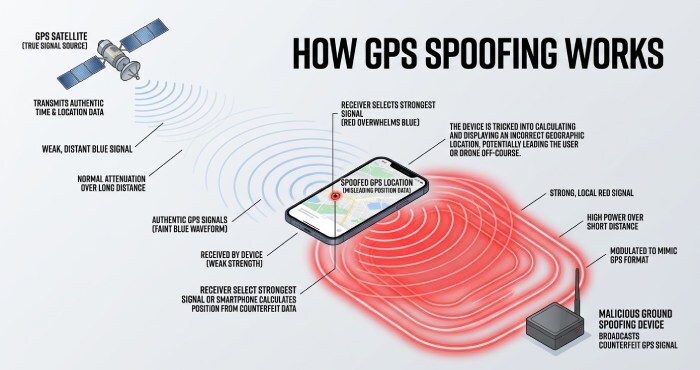
Once the device accepts the false signal, the attacker can influence:
- Geographic location
- Movement direction
- Navigation routes
- Time synchronization
- Tracking information
The victim often remains unaware because the GPS receiver continues functioning normally while displaying incorrect information.
How GPS Systems Normally Work
To understand spoofing, it helps to know how GPS functions.
GPS receivers communicate with satellites orbiting Earth. These satellites constantly broadcast timing and positioning information. By analyzing signals from multiple satellites, the receiver calculates its precise location.
Since GPS signals become very weak by the time they reach Earth, attackers can overpower them using specially generated counterfeit signals. This weakness is one reason spoofing attacks are effective.
How GPS Spoofing Attacks Work
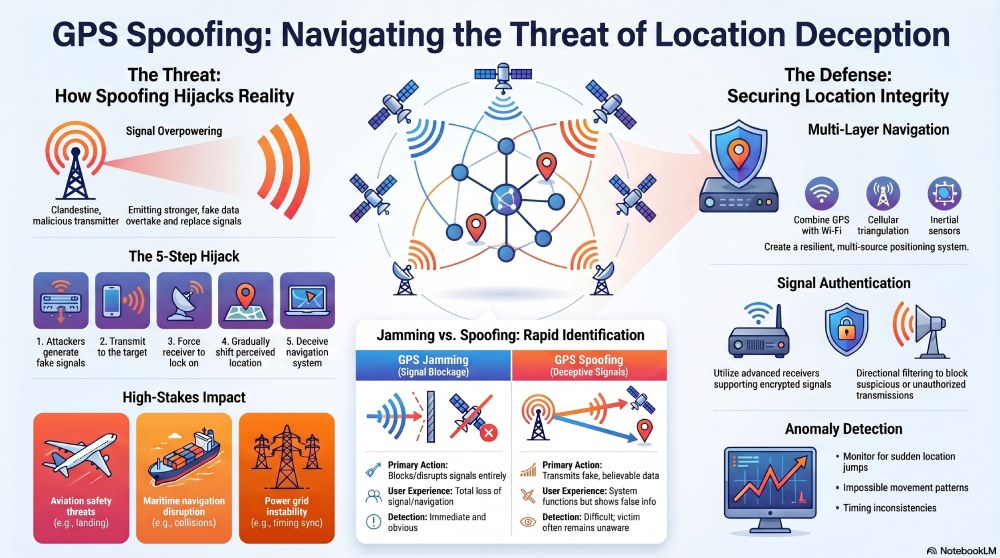
A spoofing attack generally follows several steps:
- The attacker creates counterfeit GPS signals.
- The fake signals imitate real satellite transmissions.
- The malicious signal is transmitted toward the target device.
- The receiver locks onto the stronger fake signal.
- The device begins calculating incorrect positioning data.
The attack may gradually shift the target’s location to avoid detection, or it may instantly relocate the device to a false position.
Common GPS Spoofing Techniques
Attackers use different methods depending on their goals and technical capabilities.
Fake GPS Applications
Many smartphones allow developers to simulate locations for testing purposes. Malicious users abuse this feature through spoofing applications that alter location data.
These apps are commonly used to:
- Hide real locations
- Manipulate social apps
- Bypass geographic restrictions
- Cheat location-based games
GPS Signal Simulators
More advanced attackers use hardware devices capable of broadcasting counterfeit GPS signals. These systems can target vehicles, drones, or navigation equipment.
VPN and Proxy Integration
Attackers sometimes combine spoofed GPS coordinates with VPNs or proxies to create a convincing fake identity. Matching the device’s IP address with the spoofed location helps avoid detection.
Emulator-Based Spoofing
Virtual Android or iOS environments allow users to alter location settings without directly modifying a physical device.
Instrumentation Tools
Some cybercriminals use debugging frameworks and instrumentation software to interfere with location APIs and manipulate how apps interpret GPS information.
Why Attackers Use GPS Spoofing
GPS spoofing can serve many different purposes, ranging from harmless misuse to severe criminal activity.
Privacy Concealment
Some individuals spoof locations to prevent apps, advertisers, or services from tracking them.
Fraud and Financial Abuse
Ride-sharing fraud, delivery scams, and location-based payment fraud frequently involve spoofed GPS data.
Corporate Espionage
Organizations relying on GPS tracking systems may become targets of location manipulation designed to disrupt operations or hide suspicious activity.
Military and Political Operations
Governments and hostile groups may use spoofing to interfere with drones, aircraft, ships, or defense systems.
Cyberstalking and Harassment
Spoofing can be used to falsify movement records, mislead tracking systems, or manipulate location-sharing services.
Real-World Impact of GPS Spoofing
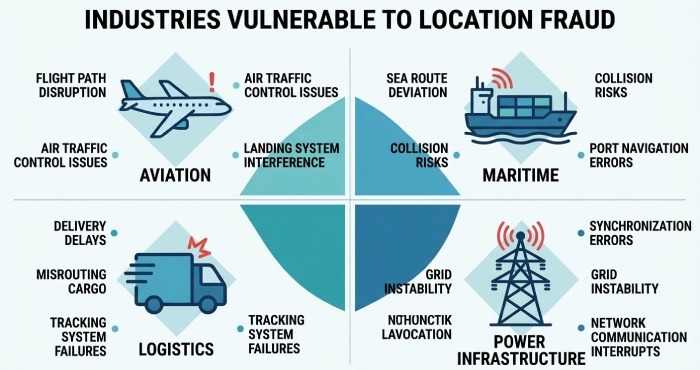
GPS spoofing affects far more than mobile apps. Entire industries depend on accurate satellite positioning and timing.
Aviation
Aircraft navigation systems rely heavily on GPS and GNSS signals. Spoofed data can create dangerous navigation errors and confusion during flight operations.
Maritime Shipping
Ships may be redirected, displaced on navigation systems, or intentionally moved off course using manipulated positioning data.
Logistics and Fleet Management
Delivery services and transportation companies use GPS tracking to manage routes and monitor assets. Spoofing can disrupt operations and hide vehicle movements.
Telecommunications
Many communication networks rely on GPS timing synchronization. Spoofing attacks can interfere with network stability and timing accuracy.
Power Infrastructure
Electrical grids use highly accurate timing systems connected to GPS signals. Timing manipulation can impact monitoring and synchronization processes.
Signs That GPS Spoofing May Be Happening
Several warning signs may indicate a spoofing attempt:
- Sudden unexplained location jumps
- Navigation routes behaving abnormally
- Incorrect timestamps
- Apps showing impossible movement patterns
- Devices appearing in unfamiliar regions
- Signal inconsistencies during travel
In severe cases, multiple nearby devices may simultaneously experience incorrect positioning.
Difference Between GPS Spoofing and GPS Jamming
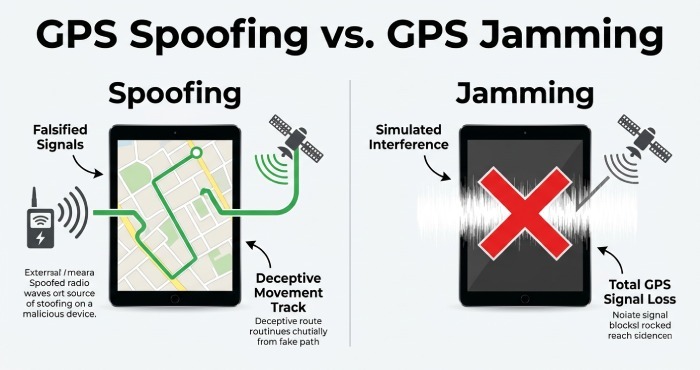
Although often confused, spoofing and jamming are different attacks.
GPS Jamming
Jamming blocks or disrupts GPS signals entirely, preventing devices from determining location data.
GPS Spoofing
Spoofing is more deceptive because it feeds false information into the receiver while allowing the system to continue operating.
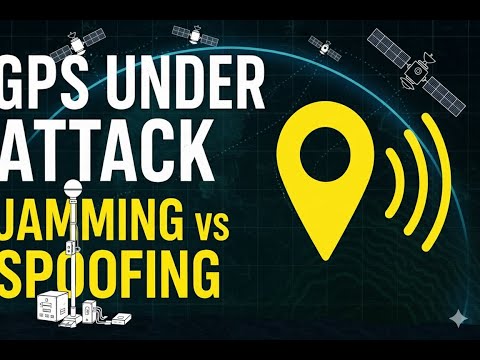
Jamming causes loss of signal. Spoofing creates believable but incorrect positioning information.
Devices Vulnerable to GPS Spoofing
Many connected technologies are susceptible to spoofing attacks, including:
- Smartphones
- Smartwatches
- Vehicle navigation systems
- Drones
- Aircraft systems
- Maritime navigation equipment
- IoT tracking devices
- Fleet monitoring systems
Any technology relying heavily on satellite positioning may become a target.
How to Protect Against GPS Spoofing
Reducing the risk of spoofing requires layered protection strategies.
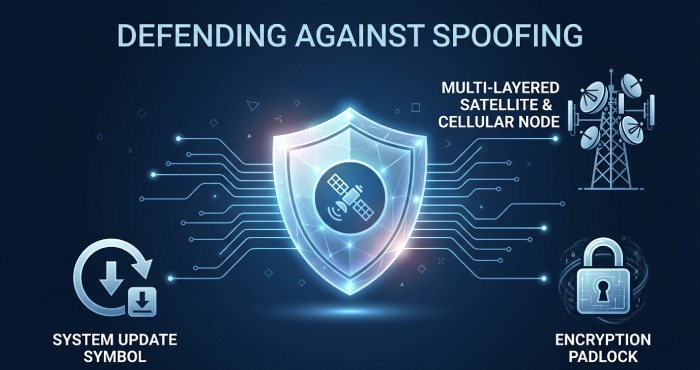
Use Multi-Layer Navigation Systems
Combining GPS with Wi-Fi positioning, cellular triangulation, inertial sensors, or alternative navigation systems improves resilience.
Monitor Signal Irregularities
Unexpected signal strength changes, impossible movement patterns, or timing inconsistencies may indicate spoofing activity.
Add Redundant Antennas
Multiple antennas can help systems compare incoming signals and detect suspicious variations.
Apply Security Updates
Keeping operating systems, firmware, and navigation software updated reduces exposure to known vulnerabilities.
Restrict Mock Location Access
On smartphones, limiting developer settings and disabling unauthorized mock location tools can reduce spoofing risk.
Use Encrypted and Authenticated Signals
Advanced GPS receivers supporting signal authentication are more resistant to manipulation.
Implement Directional Filtering
Some organizations use specialized antennas and filters to block suspicious signal sources.
Can GPS Spoofing Be Completely Prevented?
No system is entirely immune, but modern detection technologies are improving rapidly. Researchers and security vendors continue developing tools capable of identifying abnormal satellite behavior, signal distortion, and counterfeit transmissions.
Artificial intelligence, signal authentication, and multi-source verification are becoming important defenses against future spoofing threats.
The Future of GPS Security
As connected systems continue expanding, GPS integrity is becoming increasingly important. Autonomous vehicles, drone networks, smart cities, and critical infrastructure all depend on trustworthy positioning systems.
SPF, DKIM, and DMARC help protect email communications from spoofing and phishing attacks, just as GPS security defenses help prevent location spoofing and signal manipulation.
Future defenses will likely include:
- Stronger satellite authentication
- AI-powered anomaly detection
- Hybrid navigation systems
- Secure timing infrastructure
- Improved anti-spoofing hardware
Organizations that depend heavily on location accuracy should begin investing in stronger GPS security strategies now.
Final Thoughts
GPS spoofing is a sophisticated attack method that manipulates location and timing data by transmitting counterfeit satellite signals. While it may appear harmless in some consumer scenarios, it can also create serious risks for transportation, infrastructure, cybersecurity, and national defense.
As dependence on GPS technology grows, so does the importance of detecting and preventing spoofing attacks. Individuals and businesses alike should understand how these attacks work and adopt layered defenses to reduce exposure to location manipulation threats.
General Manager
General Manager at DuoCircle. Product strategy and commercial lead across the email security portfolio.
Secure your email infrastructure
Protect, authenticate, and deliver. Contact our team to find the right solution.