20 Common Threats To Domain Reputation Protection And How To Avoid Them

Quick Answer
Spam, phishing, and spoofing can harm domain reputation. SPF, DKIM, and DMARC help keep your domain secure.
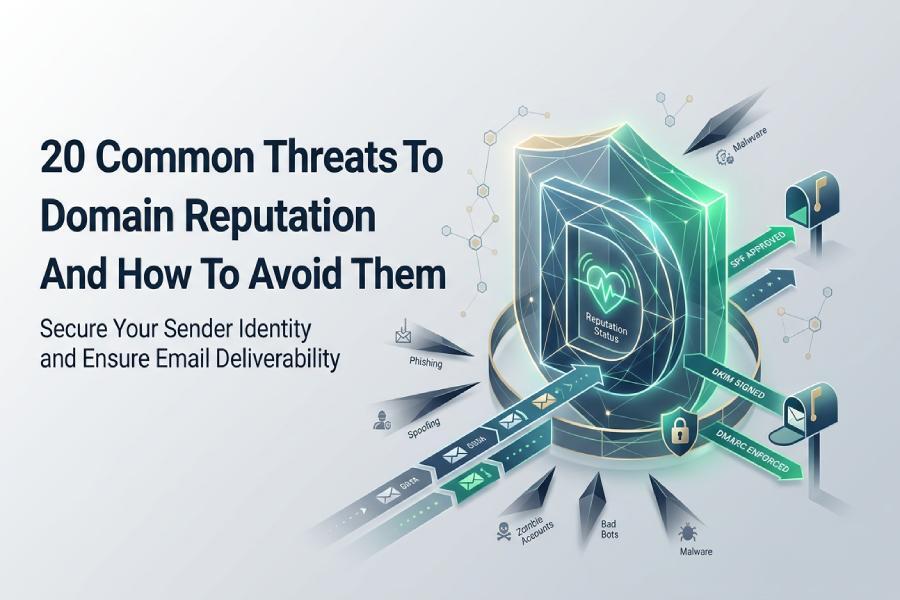
Domain reputation is shaped by hundreds of signals: authentication status, sending patterns, spam complaints, malware exposure, DNS records, backlink quality, and how mailbox providers interpret user engagement rates. A strong reputation score helps preserve email deliverability, inbox placement, operator trust, and overall domain protection. A weak reputation score can push legitimate mail into the spam folder, trigger filtering by Gmail, Yahoo, Microsoft, and other mailbox providers, or cause listings on DNS Blocklists.
Identity Abuse and Email Authentication Threats
Threat #1: Phishing Attacks Using Lookalike Domains
Phishing campaigns often use lookalike domains, typosquatting, homoglyphs, country code top-level domains, or general top-level domains to impersonate a trusted sender. A bad actor may register a similar domain and use it for credential theft, fake invoices, or malware delivery.
Avoid this by monitoring similar domain registrations through Brand Protection tools, OSINT, SIGINT, registry feeds, and threat intelligence sources. Track Affiliates, Registrars, Networks, and Service providers that may be linked to suspicious activity. When abuse is confirmed, enforce takedown procedures quickly through registrar abuse channels, hosting providers, and legal escalation.
Threat #2: Email Spoofing
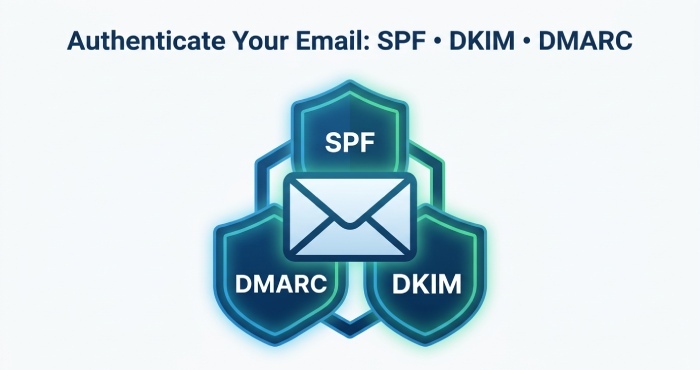
Email spoofing damages domain reputation because attackers send messages that appear to come from your domain. Mailbox providers evaluate authentication status closely, and failed email authentication can reduce your reputation score and harm email deliverability.
Use a properly configured SPF record, DKIM, and DMARC to authenticate outbound mail. Tools such as Valimail can help with DMARC enforcement, authentication status reporting, and investigating unauthorized senders. BIMI can also reinforce brand recognition when authentication is aligned. Review authentication status regularly because DNS records, third-party senders, and email service providers change over time.
Email Sending Practices That Damage Reputation
Threat #3: Poor Email Sending Practices
Poor list quality, sudden email volume spikes, irrelevant campaigns, and spammy content can cause spam complaints, lower engagement rates, and reduce email deliverability. Mailbox providers use machine learning, heuristics, open rates, click behavior, spam complaints, bounce rates, and sending patterns to determine whether mail belongs in the inbox or spam folder.
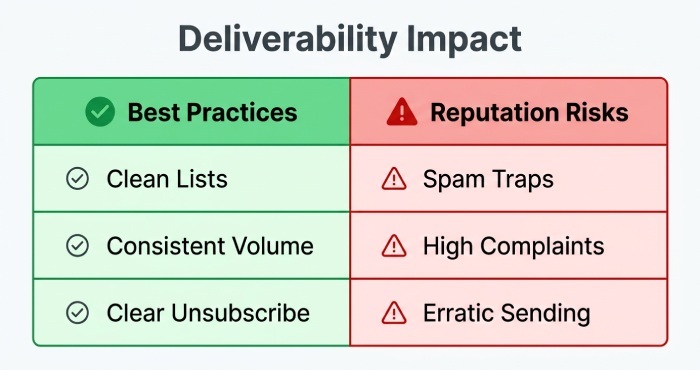
Avoid this by maintaining clean lists, removing inactive users, avoiding spam traps, and monitoring bounce rates. Consistent sending is safer than erratic sending patterns. Use reputable email service providers that provide diagnostic tools, reputation data, and campaign-level reporting. Strong engagement rates and low spam complaints improve your reputation score and deliverability rates.
Threat #4: High Complaint Rates from Email Recipients
High spam complaints are one of the strongest negative signals for domain reputation. If recipients do not recognize your messages or cannot unsubscribe easily, mailbox providers may reduce inbox placement.
Send only relevant, permission-based emails. Make unsubscribe links visible and functional, suppress complainers immediately, and segment based on engagement rates. Email service providers should help identify complaint trends, spam traps, and suspicious sending patterns before they damage email deliverability.
Threat #5: Sending from Shared or Low-Quality IP Addresses
Shared infrastructure can affect domain reputation when other senders generate spam complaints, hit spam traps, or appear on blocklists. IP reputation and domain reputation are separate but connected signals, especially when mailbox providers evaluate infrastructure hygiene and reverse DNS.
Use reputable email service providers with strong vetting, abuse controls, and transparent reporting. Check Sender Score, Google Postmaster Tools, and provider dashboards to monitor IP reputation, authentication status, email volume, engagement rates, and reputation score trends.
Technical Infrastructure and DNS Risks
Threat #6: Malware Hosted on Your Domain
Malware hosted on your site can destroy domain reputation quickly. Security providers, DNS Firewall systems, DNS Response Policy Zones, browsers, and mailbox providers may begin blocking your domain if it serves malicious files.
Scan regularly, patch CMS plugins, harden servers, and remove infected files immediately. Use threat intelligence and manual investigation to determine whether the issue came from vulnerable code, stolen credentials, or malicious uploads.
Threat #7: Compromised DNS Records
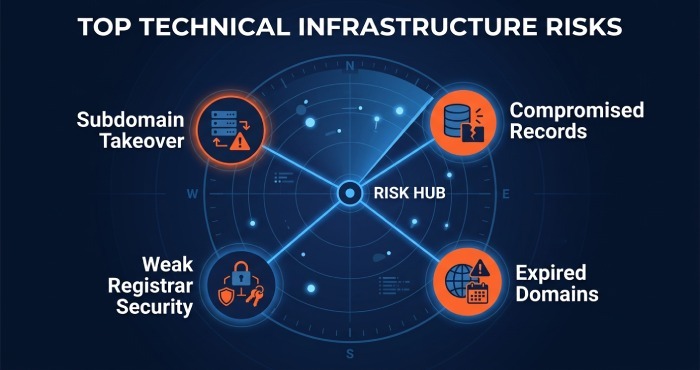
Compromised DNS records can redirect traffic, break email authentication, or allow attackers to hijack services. If MX, SPF record, DKIM, DMARC, CNAME, or A records are changed maliciously, your authentication status, email deliverability, and domain reputation may suffer.
Lock DNS settings, apply MFA, restrict administrative access, and audit changes. Strong infrastructure hygiene includes monitoring DNS records, reverse DNS, name server changes, and unauthorized zone modifications.
Threat #8: Expired Domain Registration
An expired domain can be purchased or abused by a bad actor, leading to phishing, malware distribution, or brand impersonation. This is especially risky for domains still referenced by old DNS records, applications, backlinks, or customer communications.
Enable auto-renewal, maintain updated registrar contact details, and monitor registry status. Include domains across country code top-level domains and general top-level domains in your domain protection inventory.
Threat #9: Weak Domain Registrar Security
Weak registrar security can allow unauthorized domain transfers, DNS tampering, or ownership changes. Registrars are a critical control point for domain reputation protection.
Use registrar lock, MFA, role-based access control, and change approval workflows. Restrict access to trusted administrators and document escalation contacts for each registrar.
Threat #10: Subdomain Takeover
Subdomain takeover occurs when DNS records point to abandoned cloud services, expired SaaS environments, or unused infrastructure. Attackers can claim the resource and host phishing pages, malware, or spam landing pages under your domain.
Audit unused subdomains and remove dangling DNS records. Include subdomain checks in regular infrastructure hygiene reviews and use diagnostic tools to identify exposed CNAME targets.
Blocklists, Spam Traps, and Security Provider Listings
Threat #11: Blacklisting by Email or Security Providers
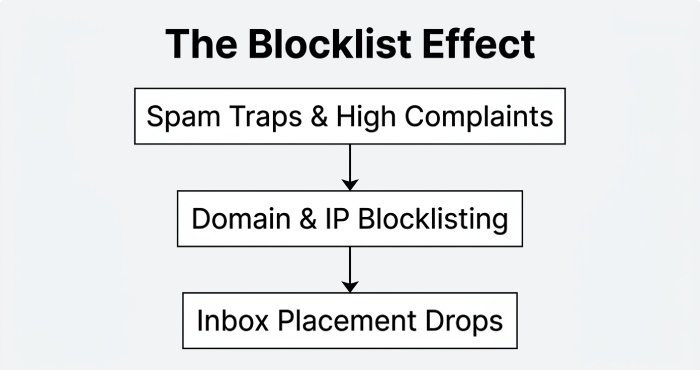
Listings on blocklists can severely harm email deliverability, inbox placement, and reputation score. Spamhaus, DNS Blocklists, Domain Blocklist (DBL), Combined Spam Sources (CSS), Exploits Blocklist (XBL), Policy Blocklist (PBL), Spamhaus Blocklist (SBL), ZEN Blocklist, Botnet Controller List (BCL), and Do Not Route or Peer (DROP) are examples of systems that influence filtering and network protection.
Track blacklist status through a Reputation Checker, Google Postmaster Tools, CERT Portal, ISP Portal, and Data Query Service where available. Resolve underlying issues before requesting delisting. That means investigating spam complaints, spam traps, compromised accounts, malware, abnormal email volume, and suspicious sending patterns.
Practical blacklist recovery checks
Before filing delisting requests, confirm that authentication status is correct, spam traps are removed, engagement rates have stabilized, reverse DNS is valid, and email service providers have stopped abusive traffic. Delisting without remediation often leads to relisting.
Web, Brand, and Content Reputation Threats
Threat #12: Spammy Backlinks
Spammy backlinks can harm search visibility and domain reputation, especially when links come from hacked sites, link farms, or malware-infected domains. Monitor backlink profiles and disavow harmful links when necessary.
Threat #13: Brand Impersonation on Fake Websites
Fraudulent sites can impersonate your brand, steal customer data, and weaken operator trust. Use Brand Protection monitoring, Media Centre alerts, OSINT, registrar reporting, and abuse desks to identify fake websites. File abuse reports against fraudulent sites and coordinate takedowns with hosting providers, Registrars, and Service providers.
Threat #14: Inconsistent SSL/TLS Protection
Expired certificates, mixed content, or missing HTTPS on subdomains can make users and security systems distrust your domain. Keep certificates current and enforce HTTPS across all pages and subdomains.
Threat #15: Data Breaches Involving Customer Information
A data breach can trigger phishing campaigns, spam complaints, legal exposure, and long-term damage to domain reputation. Strengthen access controls, encrypt sensitive data, monitor logs, and communicate transparently if incidents occur.
Threat #16: Toxic User-Generated Content
Comments, reviews, forums, and uploaded files can be abused for spam, phishing links, malware, or scams. Moderate user-generated content with filtering, machine learning, heuristics, and manual investigation for high-risk submissions.
Threat #17: Search Engine Penalties
Search engine penalties can affect trust signals and traffic quality. Avoid keyword stuffing, cloaking, doorway pages, and manipulative link schemes. Strong editorial standards support domain reputation and reduce the chance of appearing suspicious to users or automated systems.
Threat #18: Misconfigured Redirects
Misconfigured redirects can send users, crawlers, or security scanners to suspicious destinations. Review redirects regularly to ensure they do not point to irrelevant, expired, compromised, or malicious domains.
Monitoring and Incident Response Gaps
Threat #19: Lack of Reputation Monitoring
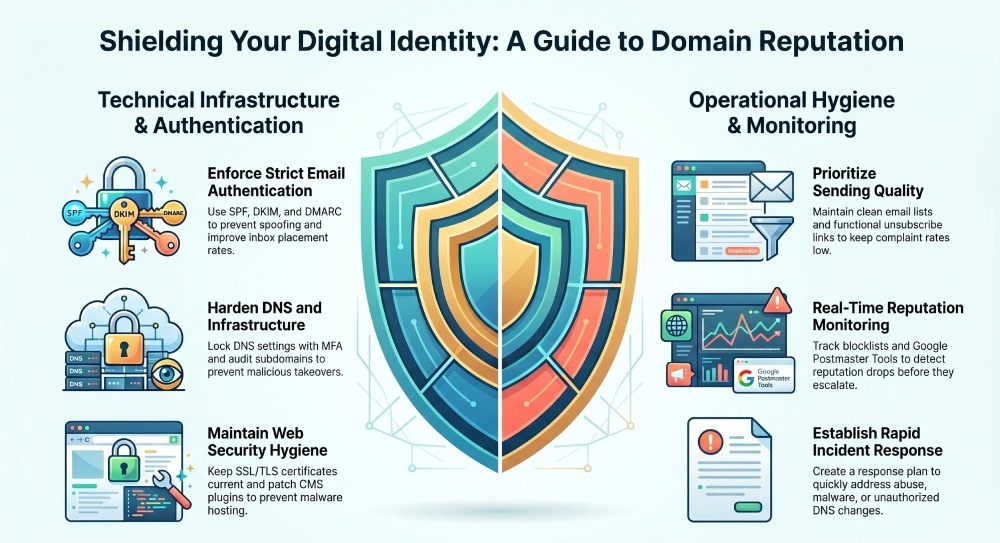
Without monitoring, teams often discover damage only after email deliverability drops, mailbox providers throttle campaigns, or customers report phishing. Set up alerts for domain mentions, blocklists, DNS records, authentication status, spam complaints, spam traps, sending patterns, open rates, engagement rates, email volume, and reputation score changes.
Use Google Postmaster Tools, Sender Score, Spamhaus resources, email service providers, DNS Firewall telemetry, threat intelligence feeds, and internal reporting. Reputation data and signal intelligence help teams detect abnormal behavior before domain reputation declines.
Threat #20: Delayed Incident Response
Slow response allows abuse to spread across mailbox providers, blocklists, search engines, security vendors, and broader email security ecosystems. Create a domain reputation and email security response plan with clear owners, escalation steps, and recovery actions.
The plan should cover investigating abuse, pausing risky campaigns, contacting email service providers, validating authentication status, checking spam traps, reviewing sending patterns, removing malware, auditing DNS records, and coordinating with Registrars, Networks, Affiliates, and Service providers. Fast action strengthens email security, protects domain reputation, improves email deliverability recovery, reduces spam complaints, and helps restore a trusted sender reputation with Gmail, Yahoo, Microsoft, and other mailbox providers.
General Manager
General Manager at DuoCircle. Product strategy and commercial lead across the email security portfolio.
Secure your email infrastructure
Protect, authenticate, and deliver. Contact our team to find the right solution.