8 DNS Propagation Checker Features To Look For In 2026

Quick Answer
A reliable DNS propagation checker should provide global resolver coverage, multiple DNS record types, real-time results, TTL details, clear propagation status, regional visibility, DNSSEC checks, and easy-to-read reports. These features help fast verify DNS changes and troubleshoot inconsistencies
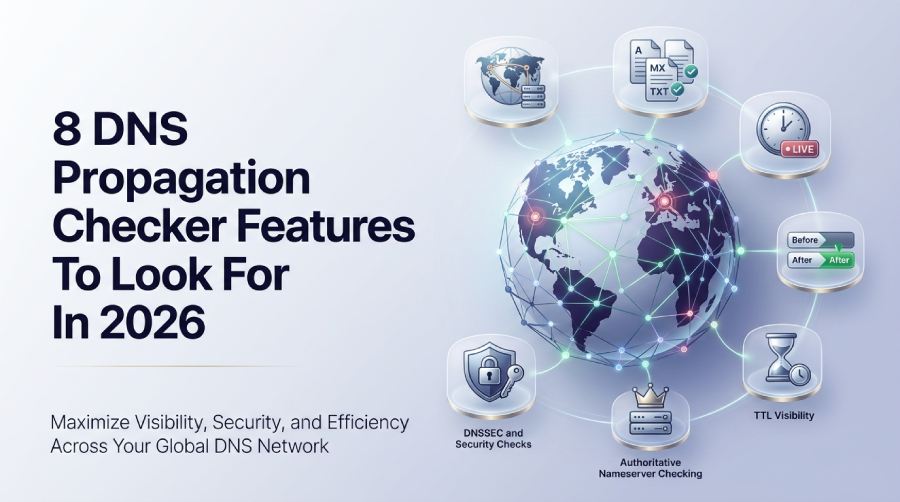
Managing websites, applications, and email systems often requires routine DNS changes, such as updating A records, modifying nameservers, configuring MX records, or adding SPF, DKIM, and DMARC records. However, these changes may not appear immediately across all platforms, making a DNS propagation checker a crucial tool for troubleshooting and monitoring.
In 2026, simply verifying the existence of a DNS record isn’t sufficient. Modern DNS setups include various authoritative nameservers, recursive resolvers, geographic zones, cloud platforms, CDNs, and security services. A dependable propagation checker should provide insights into not just the visibility of DNS changes but also where and why any discrepancies might occur.
When selecting a DNS propagation checker whether for personal sites, business domains, or enterprise infrastructures consider these eight key features.
1. Global DNS Server Coverage
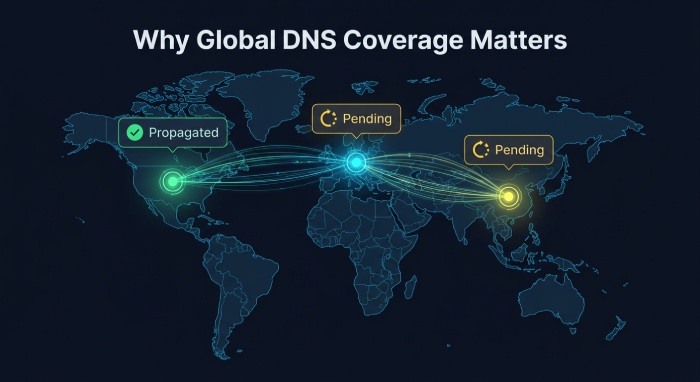
A key aspect of an effective DNS propagation checker is its extensive global coverage. DNS records are cached by resolvers in various locations, leading to potential discrepancies; a DNS change may be visible in one area while previous values persist in others. Relying on a single DNS server for checks can result in an inaccurate understanding of propagation.
A reliable checker should query DNS servers across multiple regions, such as North America, Europe, and the Asia-Pacific. This global scope enables quick identification of regional variations. For instance, if an updated A record is visible in the U.S. but not in Europe or Asia, it indicates that the change has yet to propagate consistently. This feature is particularly beneficial for international businesses, as a website might seem accessible in one region while directing users elsewhere to an outdated server.
Why this feature matters
Seek a DNS checker that offers a geographically diverse perspective instead of depending on a single resolver. A broader network of DNS servers will enhance your comprehension of actual propagation patterns.
2. Support for Multiple DNS Record Types
A contemporary DNS propagation checker must accommodate a variety of record types beyond just A and AAAA records. DNS serves multiple functions for organizations, including website routing, email validation, domain verification, service discovery, and enforcing security protocols. Therefore, your checker should support a range of common record types.
- A
- AAAA
- CNAME
- MX
- TXT
- NS
- SOA
- CAA
- SRV
- PTR
TXT record support is crucial for email security, as configurations like SPF, DKIM, and DMARC rely on them. When diagnosing email authentication issues, verifying the visibility of the correct TXT values across various DNS positions can be time-saving.
For instance, if you implement a new DMARC policy but reports show that recipients can’t locate the expected record, using a propagation checker can reveal whether the problem lies with DNS visibility instead of the DMARC syntax.
Why this feature matters
Select a tool that accommodates the record types you typically handle. A comprehensive range of record support enhances the utility of the checker for both website infrastructure and email security.
3. Real-Time DNS Lookup Results
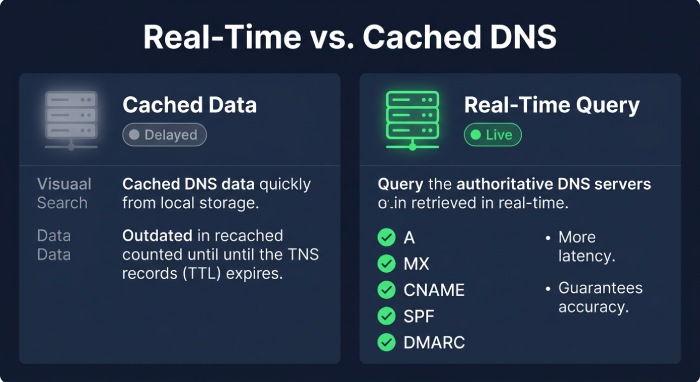
Effective DNS troubleshooting frequently hinges on having up-to-date information. A checker that depends on outdated or delayed data may hinder your ability to verify the implementation of recent changes. By 2026, it’s advisable to utilize a DNS propagation checker that conducts live DNS queries and transparently displays the timestamp of the results.
The capability of real-time querying is especially crucial right after modifications are made.
- Nameservers
- A or AAAA records
- MX records
- CNAME records
- SPF records
- DKIM records
- DMARC records
- CAA records
The interface must effectively differentiate between current DNS responses and data from previous caches.
A reliable tool can facilitate temporal comparisons. After modifying a record, testing it right away and again after a few hours should reveal if additional DNS servers have begun to return the updated value.
Why this feature matters
Current results enhance propagation checks during live DNS updates, allowing administrators to base decisions on the most accurate information.
4. Clear Comparison of DNS Responses
Raw DNS responses can be challenging to interpret, especially across multiple locations.
An effective DNS propagation checker should display results clearly, eliminating the need for users to manually analyze technical details. For instance, if an A record is updated, it can highlight that most locations reflect the new IP, while some still show the old one.
Similarly, when comparing TXT records, particularly lengthy SPF or DMARC strings, a well-designed tool should clearly indicate which locations yield matching values and which diverge.
Ideally, the tool should show information such as:
Location → DNS server → Response → Status → Record value
This makes it easier to identify patterns and isolate potential problems.
Why this feature matters
A propagation checker’s goal extends beyond just gathering DNS responses; it should facilitate quick comprehension of them. By providing clear comparisons, it minimizes troubleshooting time and decreases the likelihood of misinterpreting DNS information.
5. TTL Visibility
Time to Live (TTL) is crucial in DNS caching, as it indicates how long a resolver can store a DNS record before needing to query again. A DNS propagation checker should display TTL data whenever feasible.
If an A record is updated but some resolvers still return the old address, a high TTL may explain the persistence of the cached value.
Understanding TTL visibility is important for analyzing propagation, offering insight into whether caching is impacting responses.
In DNS migrations, administrators typically lower TTL values prior to significant changes to facilitate quicker cache expiration, then restore them after confirming stability post-migration.
Why this feature matters
A propagation checker lacking TTL information provides only a partial understanding of the situation. The visibility of TTL values elucidates the reasons why various DNS locations might occasionally yield differing outcomes.
6. Authoritative Nameserver Checking
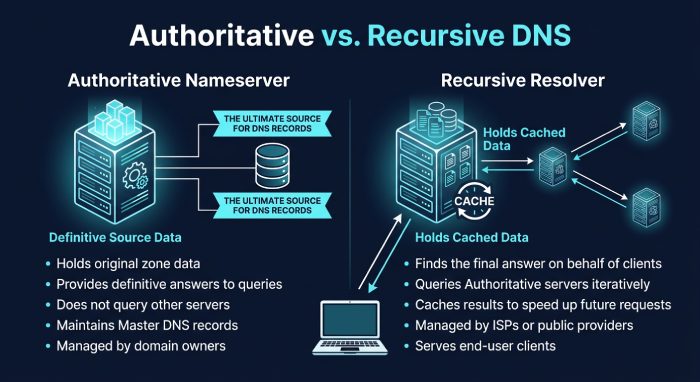
A key feature is the ability to differentiate between authoritative nameservers and recursive DNS resolvers.
Authoritative nameservers contain the definitive DNS data for a domain, while recursive resolvers fetch and cache this information for users.
This distinction is crucial for diagnosing issues. For instance, if the authoritative nameserver shows the updated DNS record, but multiple public resolvers still display the old one, caching may be the problem.
Conversely, if the authoritative nameservers present inconsistent data, it may indicate a configuration or DNS hosting issue.
Thus, an effective DNS propagation checker should provide both authoritative DNS details and resolver results.
Why this feature matters
Utilizing authoritative nameserver checks assists in distinguishing authentic DNS configuration issues from typical resolver caching behavior. This practice can greatly minimize the need for unnecessary troubleshooting efforts.
7. DNSSEC and Security Checks
As DNS security grows in importance, DNS propagation tools must offer more than just basic record visibility.
DNSSEC (Domain Name System Security Extensions) enhances protection against manipulation of DNS responses by validating DNS data.
An effective DNS checker should include information on DNSSEC status — such as the presence of DNSSEC records and any validation issues. Additionally, a security-focused checker can aid in reviewing CAA records, which dictate which certificate authorities may issue TLS certificates for a domain.
For organizations focused on email security, the tool should facilitate the verification of TXT-based authentication records like SPF, DKIM, and DMARC, crucial for protecting against spoofing and enhancing email authentication.
While a propagation tool cannot replace comprehensive DNS security audits, these extended checks offer valuable insights during configuration updates.
Why this feature matters
DNS plays a crucial role in your security framework. Utilizing a propagation checker that offers security insights can deliver greater benefits than a standard record lookup tool.
8. Historical Tracking and Monitoring
A key distinction between basic DNS lookup tools and advanced DNS monitoring platforms is the ability to track historical data.
While a single lookup reveals the current DNS status, historical monitoring records changes over time, indicating when modifications occurred and their consistency.
This capability is especially beneficial for companies managing essential domains. For instance, if an MX record changes unexpectedly, a historical DNS monitoring system can pinpoint when the alteration happened and offer documentation for further analysis.
Similarly, monitoring can detect unexpected changes to:
- A records
- Nameservers
- MX records
- TXT records
- CNAME records
- CAA records
- SPF policies
- DKIM records
- DMARC policies
Certain advanced platforms can alert users to unexpected changes in DNS records. This feature is valuable for security teams, as unauthorized DNS alterations can redirect traffic, disrupt emails, or facilitate phishing attacks.
Why this feature matters
The incorporation of historical tracking shifts DNS verification from a reactive approach focused on addressing issues to a proactive strategy centered on monitoring infrastructure.
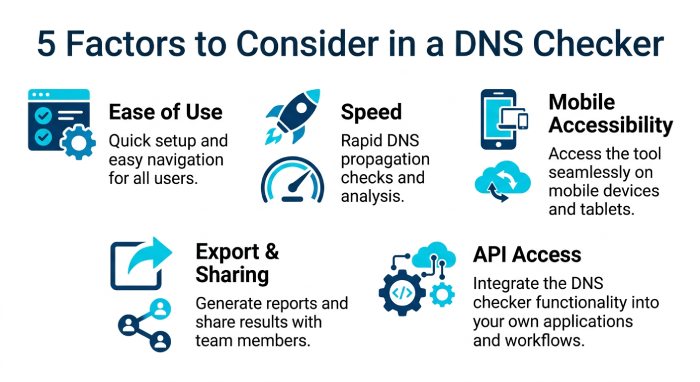
What Else Should You Consider When Choosing a DNS Propagation Checker?
The eight features above should form the foundation of your evaluation, but several additional factors can influence your choice.
- Ease of Use: DNS can be intricate. A propagation checker should convey detailed information while maintaining a user-friendly interface. An effective dashboard allows you to input a domain, choose a record type, execute a query, and quickly comprehend the results.
- Speed: Troubleshooting DNS changes can be frustrating when results take too long. Seek a tool that delivers prompt insights while querying a sufficient number of DNS locations.
- Mobile Accessibility: DNS problems can occur away from your desk. Mobile-friendly web interfaces enable administrators to conduct quick checks when necessary.
- Export and Sharing Options: Enterprise teams find it beneficial to export results or collaborate with colleagues. DNS troubleshooting typically involves network administrators, developers, security professionals, hosting providers, and domain registrars.
- API Access: Incorporating DNS monitoring into a broader infrastructure framework enhances its value through Application Programming Interfaces(API) access. This enables teams to seamlessly integrate DNS checks into monitoring systems, scripts, dashboards, or automated workflows.
DNS Propagation Checker vs. Standard DNS Lookup
It’s essential to recognize that these tools serve different purposes. A standard DNS lookup reveals the result from a specific resolver for a domain, while a DNS propagation checker offers insights from various locations or servers.
For instance, a standard lookup may return:
example.com → 192.0.2.10
Conversely, a propagation checker might indicate that some servers show 192.0.2.10, whereas others still display 192.0.2.5.
This distinction is crucial for assessing the global visibility of DNS changes.
Why DNS Propagation Matters for Email Security
DNS propagation is critical when updating email authentication records like SPF, DKIM, and DMARC. Incorrect changes or delays in visibility can disrupt email authentication. For instance, switching a DMARC policy from monitoring to enforcement has significant implications, so administrators must ensure the new DNS records are correctly published.
When incorporating an SPF include for a new email service, verifying DNS propagation ensures the TXT record can be seen from various locations. Similarly, when updating DKIM keys or selectors, confirming DNS visibility is essential for receiving systems to access the public key. Thus, checking DNS propagation is a vital aspect of maintaining email security and deliverability.
A Simple DNS Propagation Checking Workflow
An efficient workflow significantly simplifies the management of DNS modifications.
To begin with, ensure that you document the current DNS record prior to implementing any changes; this serves as a reliable reference point for future comparisons. Proceed to execute the desired DNS update through your chosen DNS provider or hosting service. Subsequently, utilize a propagation checker to retrieve the record from various global locations. Analyze the results for consistency across these queries.
It is also important to verify the authoritative nameservers. If they reflect the correct information, any discrepancies among recursive resolvers may be due to caching issues. Lastly, review the Time to Live (TTL) settings and allow sufficient time for cached responses to expire when necessary.
Finally, perform a direct verification of the application or service. For email checks, send controlled test messages and assess SPF, DKIM, and DMARC results instead of depending solely on DNS visibility.
While a DNS propagation checker is a straightforward tool, selecting the right one can simplify DNS management significantly. In 2026, the most effective tools should offer more than just basic yes-or-no responses.
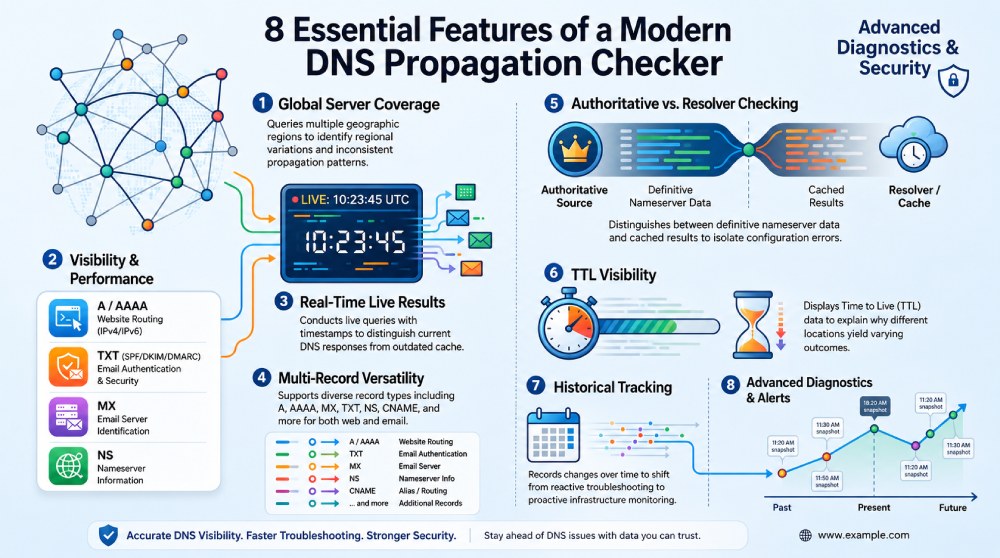 When choosing a DNS propagation checker, focus on global DNS coverage, support for multiple record types, real-time results, clear response comparisons, TTL visibility, authoritative nameserver checks, DNSSEC (Domain Name System Security Extensions), security features, and historical monitoring. These functions provide a comprehensive view of how DNS changes perform across the internet.
Whether you’re migrating a website, switching hosting providers, updating nameservers, configuring email authentication, or investigating unexpected DNS changes, an effective propagation checker can expedite problem identification and enhance decision-making.
Crucially, DNS propagation is not merely a waiting game. It involves understanding the interplay between authoritative DNS, recursive resolvers, caching, TTLs, and geographic distribution. The right checker simplifies this complexity into actionable insights.
General Manager
General Manager at DuoCircle. Product strategy and commercial lead across the email security portfolio.
Secure your email infrastructure
Protect, authenticate, and deliver. Contact our team to find the right solution.