SQL Injection Prevention: Essential Strategies for Securing Modern Applications

Quick Answer
SQL injection prevention involves using parameterized queries, prepared statements, input validation, least-privilege database access, and regular security testing. These practices help stop attackers from manipulating database queries, protecting sensitive data and maintaining application security.
Web applications rely heavily on databases to store and manage information. While this connectivity enables powerful functionality, it also creates opportunities for cybercriminals to exploit weaknesses in application code. One of the most persistent threats is SQL injection, a technique that allows attackers to manipulate database queries through malicious input.
Understanding how SQL injection works and implementing strong defensive measures can significantly reduce the risk of data breaches, unauthorized access, and system compromise.
Understanding SQL Injection
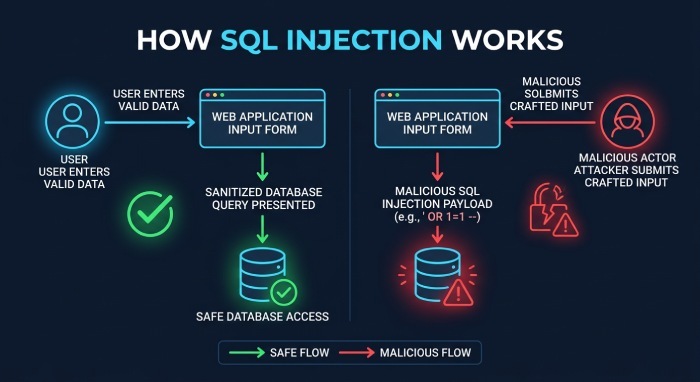
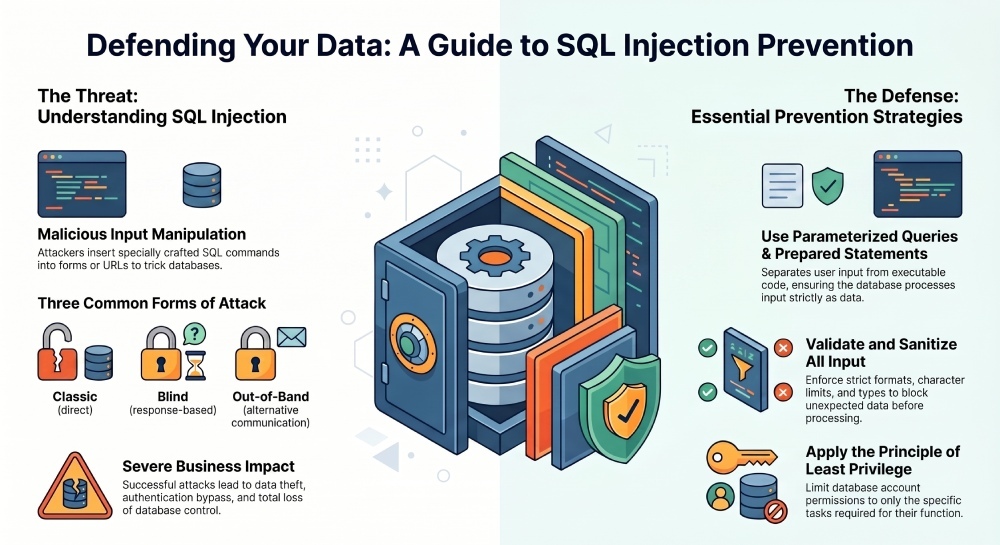
SQL injection is a security vulnerability that occurs when an application improperly handles user input before sending it to a database. Attackers exploit this weakness by inserting specially crafted SQL commands into forms, search fields, login pages, or URL parameters.
When the application fails to validate or separate user input from database commands, the database may execute unintended instructions. This can lead to exposure of confidential information, modification of records, or even complete database control.
Why SQL Injection Remains Dangerous
Despite being a well-known vulnerability, SQL injection continues to affect organizations of all sizes. Successful attacks can result in:
- Unauthorized access to sensitive records
- Theft of customer information
- Data modification or deletion
- Authentication bypass
- Disruption of business operations
- Reputational and financial damage
Because databases often contain critical business information, a single vulnerable application can expose an entire organization.
Common Forms of SQL Injection
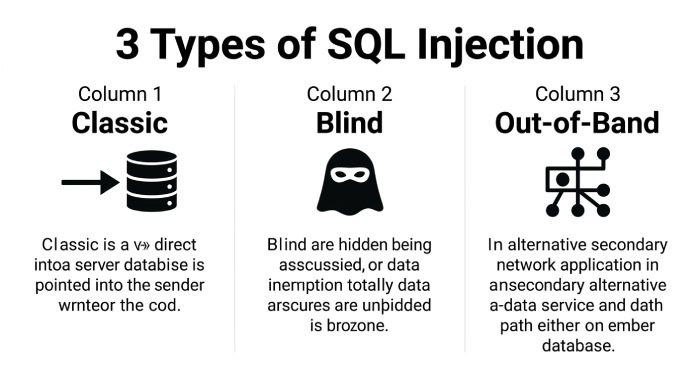
Classic Injection
This occurs when malicious SQL commands are directly inserted into application inputs and executed by the database.
Blind SQL Injection
In some applications, error messages are hidden from users. Attackers instead rely on application responses and behavior changes to determine whether their injected queries are working.
Out-of-Band Injection
This method uses alternative communication channels to retrieve data or execute commands when direct responses are unavailable.
Effective Ways to Prevent SQL Injection
Use Parameterized Queries
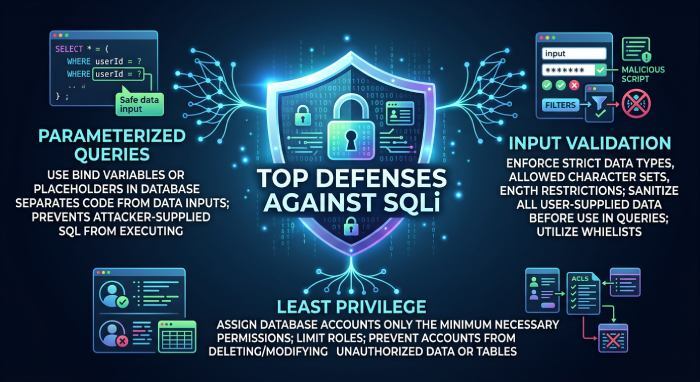
Parameterized queries separate user-supplied data from SQL commands. Instead of treating input as executable code, the database processes it strictly as data.
This approach is widely considered one of the most reliable defenses against SQL injection.
Implement Prepared Statements
Prepared statements allow developers to define SQL structures in advance while safely inserting user input as parameters. This reduces the likelihood that malicious input can alter query behavior.
Validate and Sanitize Input
Applications should verify that all user input matches expected formats, lengths, and character types. Input validation helps block unexpected data before it reaches the database.
Examples include:
- Restricting numeric fields to numbers only
- Limiting character lengths
- Rejecting invalid characters
- Enforcing predefined formats
Apply the Principle of Least Privilege
Database accounts should receive only the permissions necessary for their specific tasks.
For example, an account responsible for viewing records should not automatically have permission to delete tables or modify database structures.
Limiting privileges helps minimize damage if an attack succeeds.
Utilize Stored Procedures Carefully
Stored procedures can reduce exposure by controlling how database operations are executed. However, they should still use parameterized inputs and secure coding practices to avoid introducing new vulnerabilities.
Strengthen Authentication Controls
Strong authentication mechanisms provide an additional layer of protection. Security measures may include:
- Multi-factor authentication (MFA)
- Strong password policies
- Role-based access control
- Session management controls
These safeguards help reduce the impact of unauthorized access attempts.
Deploy Multiple Security Layers
No single defense can eliminate every threat. Organizations should combine secure coding practices with additional protections such as:
- Web application firewalls (WAFs)
- Intrusion detection systems
- Continuous monitoring
- Security logging and alerting
- Regular vulnerability assessments
While SQL injection defenses protect web applications and databases, DuoCircle helps strengthen email security with SPF, DKIM, and DMARC to prevent spoofing and phishing attacks.
A layered approach provides stronger protection against evolving attack techniques.
Testing for SQL Injection Vulnerabilities
Regular testing helps identify weaknesses before attackers do. Security teams commonly use:
- Automated Security Scanners: Automated tools can analyze applications and detect potential SQL injection vulnerabilities during development and deployment.
- Penetration Testing: Security professionals simulate real-world attacks to uncover weaknesses that automated tools may miss.
- Code Reviews: Reviewing application code helps identify unsafe database interactions and insecure query construction practices.
Building a Secure Development Culture
Preventing SQL injection is not only about technology—it also requires secure development habits. Organizations should educate developers about common vulnerabilities, secure coding standards, and proper database interaction techniques.
Regular training and security-focused development processes can significantly reduce the introduction of new vulnerabilities.
Conclusion
SQL injection remains one of the most significant threats to database-driven applications. Attackers continue to exploit insecure coding practices to gain access to valuable information and critical systems.
Organizations can greatly reduce their exposure by adopting parameterized queries, enforcing strict input validation, limiting database privileges, and implementing layered security controls. Combined with ongoing testing and developer education, these measures create a stronger foundation for application security and help protect sensitive data from compromise.
General Manager
General Manager at DuoCircle. Product strategy and commercial lead across the email security portfolio.
Secure your email infrastructure
Protect, authenticate, and deliver. Contact our team to find the right solution.