DKIM For Multi-Tenant SaaS: Email Authentication Best Practices

Quick Answer
DKIM deployment for multi-tenant SaaS platforms requires unique selectors, secure key management, regular key rotation, and proper DNS setup. Following DKIM best practices helps prevent email spoofing, improves deliverability, and strengthens email authentication across multiple tenant domains.
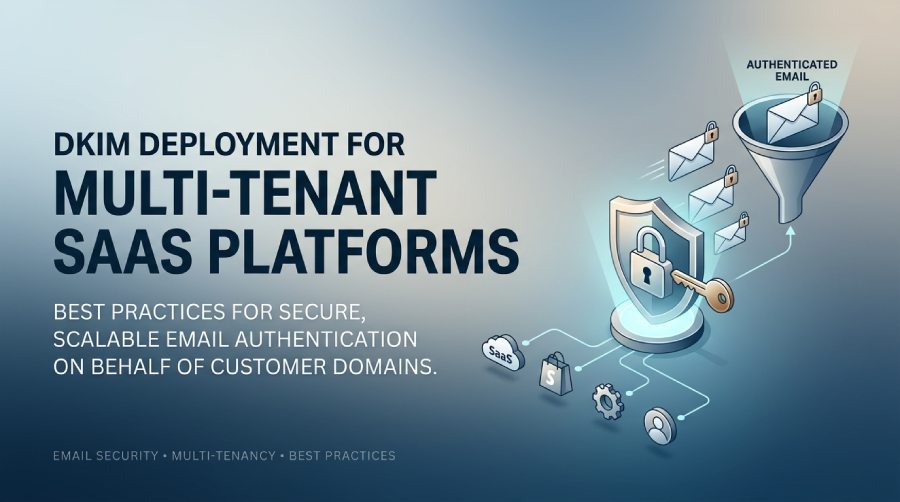
Email continues to be a vital communication tool for Software-as-a-Service (SaaS) platforms. From user alerts and password resets to billing notifications, marketing initiatives, and transactional correspondence, SaaS providers rely on consistent and dependable email delivery. However, the rise in email-based threats, including phishing, spoofing, and business email compromise (BEC), has made the protection of outbound emails a critical concern.
One of the most reliable methods for email authentication available today is DomainKeys Identified Mail (DKIM). For multi-tenant SaaS platforms that send emails on behalf of various customers, implementing DKIM can be particularly complex. Each tenant may possess its own domain, branding needs, compliance requirements, and specific email infrastructure setups.
This article delves into the intricacies of deploying DKIM in multi-tenant SaaS environments and provides best practices for establishing secure, scalable, and compliant email authentication.
Understanding DKIM and Its Role in Email Security
DKIM is a standard for email authentication that enables recipient mail servers to confirm that an email was permitted by the domain of the sender and that it has remained unchanged while being transmitted.
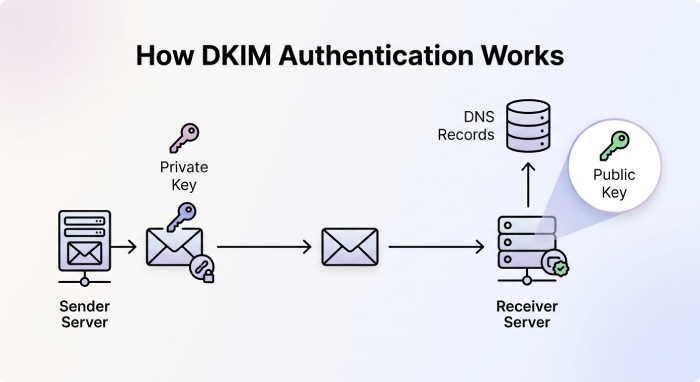
The mechanism operates as follows:
- The originating server uses a private cryptographic key to provide a digital signature for outgoing emails.
- The associated public key is then made accessible through the domain’s DNS records.
- Receiving servers obtain this public key from the DNS.
- They validate the digital signature affixed to the email.
When the validation is successful, recipients can trust that the email is both legitimate and unaltered.
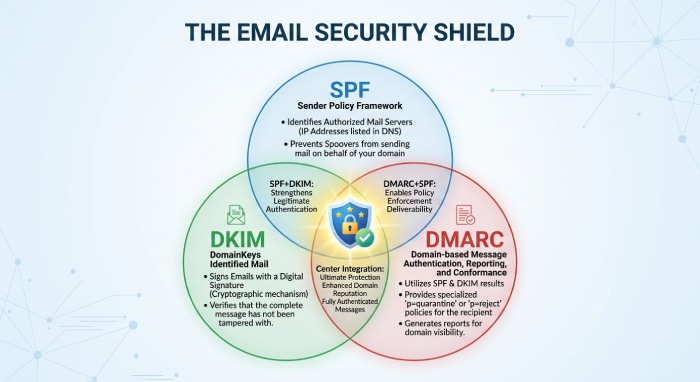
DKIM is an integral element of contemporary email security systems, functioning in conjunction with SPF and DMARC to safeguard domains from spoofing and impersonation threats.
Why Multi-Tenant SaaS Platforms Face Unique DKIM Challenges
In contrast to conventional enterprises that handle email authentication for one domain, multi-tenant SaaS providers typically dispatch communications on behalf of numerous client domains.
Examples include:
- Marketing automation platforms
- CRM systems
- Helpdesk solutions
- E-commerce platforms
- Customer engagement platforms
- Notification and transactional email services
In these environments, the platform must support:
- Multiple sending domains
- Tenant-specific branding
- Individual DNS configurations
- Regulatory compliance requirements
- High-volume email delivery
Incorrect implementation of DKIM can result in authentication issues, challenges with deliverability, and security risks that impact all users on the platform.
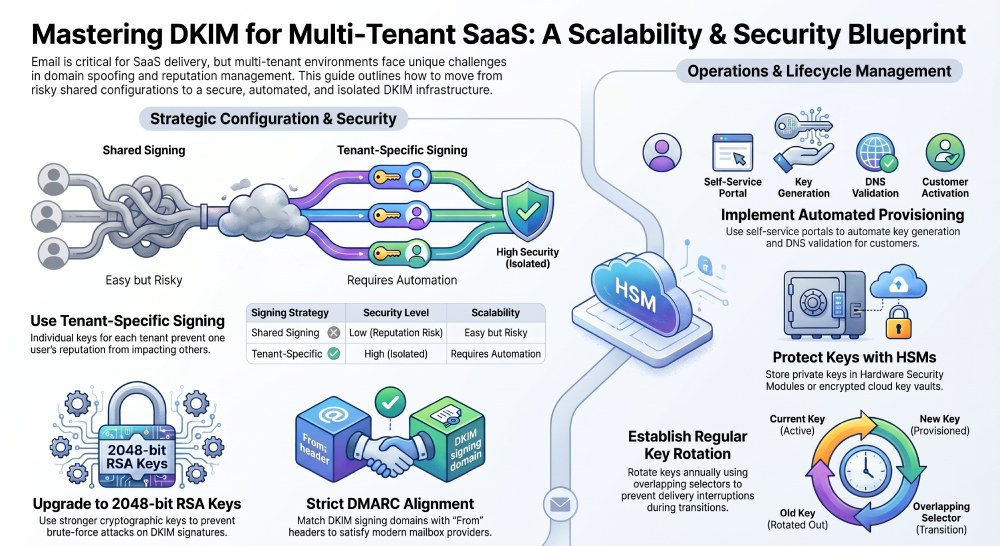
Choose Tenant-Specific DKIM Signing Whenever Possible
A critical aspect of deployment strategy involves deciding between employing a common DKIM key or opting for tenant-specific DKIM keys.
Certain SaaS providers streamline their processes by utilizing a singular shared signing domain for all their clients. Although this method simplifies management, it also presents various risks:
- Reduced tenant isolation
- Difficulty identifying compromised tenants
- Deliverability issues affecting multiple customers
- Limited alignment with DMARC policies
A better approach is to provide each tenant with its own DKIM selector and signing configuration.
Benefits include:
- Stronger security boundaries
- Better reputation management
- Easier troubleshooting
- Improved DMARC alignment
- Enhanced customer trust
Tenant-specific signing safeguards that any authentication issues or reputation concerns related to an individual client do not adversely affect other customers.
Implement Automated DKIM Provisioning
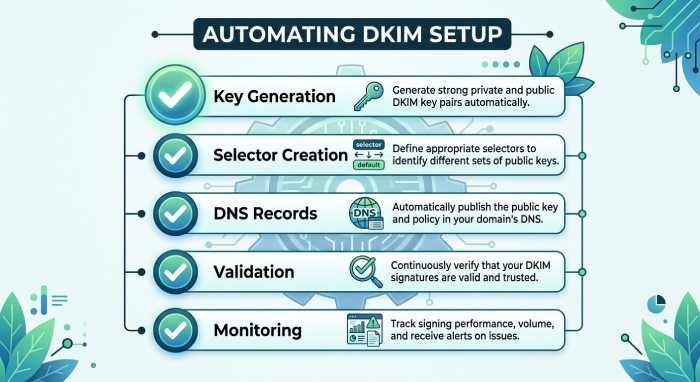
Configuring DKIM manually for hundreds or thousands of tenants is not a feasible approach. Contemporary SaaS solutions ought to streamline the entire onboarding process through automation, which includes:
-
DKIM key generation
-
Selector creation
-
DNS record generation
-
Validation workflows
-
Activation monitoring
 A self-service onboarding portal can allow customers to:
 -
Add their sending domain.
-
Receive DNS instructions automatically.
-
Publish DKIM records.
-
Verify successful configuration.
Automation minimizes the potential for human mistakes and speeds up customer onboarding, all while maintaining uniformity throughout the platform.
Use Strong Cryptographic Keys
The effectiveness of DKIM security is significantly influenced by the robustness of the cryptographic keys employed. In the past, a number of organizations utilized 1024-bit RSA keys. However, contemporary security guidelines are progressively advocating for the use of more powerful keys.
Recommended practices encompass the following:
- Utilize 2048-bit RSA keys whenever feasible.
- Steer clear of weak or obsolete key lengths.
- Adhere to the latest cryptographic guidelines.
- Periodically assess industry security recommendations.
Employing more robust keys substantially enhances the difficulty for attackers attempting to compromise DKIM signatures through brute-force or cryptographic methods. Although larger keys can lead to increased DNS record sizes, the security advantages generally surpass the operational implications.
Implement a Secure DKIM Key Management Strategy
DKIM private keys play a crucial role in ensuring the authenticity of outgoing emails; therefore, it is imperative to regard them as critical security assets. Should a private key be compromised, malicious actors could forge emails that seem to come from your domain, thereby posing risks to your reputation and facilitating phishing attempts.
Restrict Access to Private Keys
Access to DKIM signing keys should be limited to only the systems and personnel that require it. Organizations should enforce:
- Role-based access controls (RBAC)
- Least-privilege access policies
- Strong authentication and authorization mechanisms
Limiting access reduces the likelihood of accidental exposure or unauthorized use.
Protect Keys with Encryption
It is essential to always store private keys in an encrypted format. Utilizing encryption protects these keys, ensuring that even if storage systems are breached, attackers cannot readily access or utilize them.
Leverage Hardware Security Modules (HSMs)
In extensive SaaS ecosystems, Hardware Security Modules (HSMs) or cloud-based key management solutions deliver an enhanced level of security by providing:
- Secure key storage
- Tamper-resistant environments
- Detailed access auditing
- Controlled cryptographic operations
These solutions minimize the risk of key theft and unauthorized key usage.

Monitor and Audit Key Activity
Ongoing surveillance is vital for identifying possible security threats. Institutions must monitor:
- Unauthorized access attempts
- Unusual or unexpected signing activity
- Changes to DKIM configurations and key settings
Comprehensive logging and regular audits help identify threats before they impact email security.
Why Secure Key Management Matters
An organized key management strategy enhances the security of DKIM, safeguards the reputation of the domain, and notably decreases the likelihood of email spoofing that may arise from compromised signing keys.
Establish Regular DKIM Key Rotation Policies
Numerous organizations implement DKIM keys without ever updating them, which elevates their long-term vulnerability. By routinely rotating keys, companies can mitigate the risks associated with compromised credentials and adhere to established security best practices.
A recommended rotation strategy includes:
- Rotating keys annually or semi-annually
- Maintaining overlapping keys during transitions
- Supporting multiple active selectors
- Automating key rollover procedures
Employing various selectors enables platforms to introduce new keys while phasing out outdated ones, thereby reducing interruptions during key rotation processes.
Maintain Proper DKIM Selector Management
Selectors play a crucial role in determining the appropriate DKIM public key for signature verification. In extensive multi-tenant settings, ineffective management of selectors can lead to significant disorder. It is advisable to adhere to the following best practices:
- Use standardized naming conventions.
- Generate unique selectors for tenants.
- Avoid selector reuse across customers.
- Track selector ownership and lifecycle.
- Document rotation schedules.
A well-organized selector strategy simplifies administration and reduces configuration errors.
Ensure Alignment with DMARC Requirements
DKIM alone does not fully protect against email spoofing.
To maximize security, DKIM should be deployed alongside:
- SPF (Sender Policy Framework)
- DMARC (Domain-based Message Authentication, Reporting, and Conformance)
- For DMARC compliance, DKIM alignment is especially important.
Alignment takes place when the domain used for DKIM signing either matches or is closely associated with the domain shown in the email’s From header.
Multi-tenant SaaS providers should:
- Support custom tenant domains.
- Enable aligned DKIM signing.
- Verify domain ownership before activation.
- Provide DMARC-compatible configurations.
Ensuring correct alignment enhances the success rates of authentication processes and assists clients in implementing more robust DMARC policies.
Validate Domain Ownership Before Enabling DKIM
A fundamental security necessity for SaaS platforms is to verify that customers genuinely possess the domains they assert ownership over. In the absence of this validation, malicious actors could try to set up DKIM for domains that they do not legitimately control.
Verification methods may include:
- DNS TXT record validation
- Email-based verification
- Domain ownership challenges
DNS-based validation is typically favored due to its ability to show administrative authority over the domain. DKIM signing should only be enabled once verification is successfully completed.
Provide Continuous DKIM Monitoring and Reporting
Implementing DKIM is an ongoing process rather than a singular event. Various factors such as DNS modifications, expired records, issues with key rotation, or incorrect tenant configurations can lead to unexpected disruptions in authentication.
Continuous monitoring should include:
Signature Validation Monitoring
Verify that outgoing messages pass DKIM checks.
DNS Record Monitoring
Detect missing, modified, or invalid DKIM records.
Failure Alerting
Generate notifications when:
- Authentication failures increase
- DNS records disappear
- Selectors become invalid
Reporting Dashboards
Provide tenants with visibility into:
- DKIM status
- Authentication pass rates
- Configuration health
- Deliverability metrics
Visibility helps customers proactively address issues before they affect email delivery.
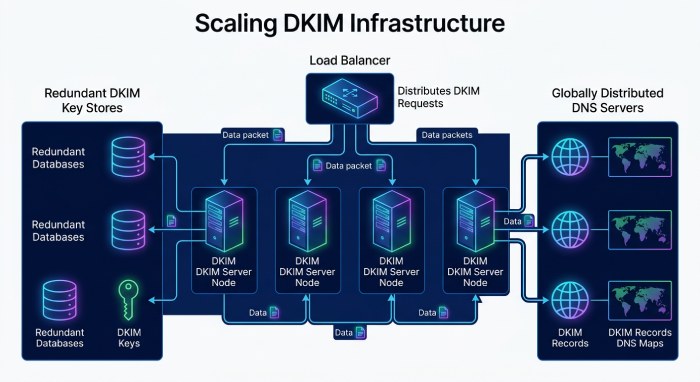
Support High Availability and Scalability
Multi-tenant SaaS solutions frequently dispatch millions of emails each day. Therefore, the DKIM infrastructure must be able to accommodate this scale.
Key considerations include:
- Distributed Signing Architecture: Mitigate the risk of single points of failure by implementing a strategy that distributes signing services across various regions and systems.
- Redundant DNS Infrastructure: Make certain that public DKIM keys are consistently available via dependable DNS service providers.
- Load-Balanced Signing Services: Signing operations must be capable of handling maximum traffic levels while maintaining low latency.
- Disaster Recovery Planning: Maintain backups of:
- DKIM keys
- Selector configurations
- Tenant mappings
A robust architectural design guarantees that authentication processes continue to function effectively, even in the event of infrastructure interruptions.
Protect Against Insider Threats
External attackers are not the only risk. Insider threats can also compromise DKIM systems if access controls are weak.
Protective measures include:
- Segregation of duties
- Administrative approval workflows
- Access logging
- Continuous auditing
- Privileged account monitoring
These measures minimize the risk of unauthorized access to keys and prevent harmful alterations to configurations.
Educate Tenants About Email Authentication
Numerous SaaS clients do not possess extensive knowledge in email authentication. Offering educational materials can enhance the success rates of deployments.
Helpful resources include:
- Setup guides
- Knowledge base articles
- DNS configuration tutorials
- DMARC implementation recommendations
- Troubleshooting documentation
Educating customers decreases the number of support inquiries and contributes to a safer email environment.
Prepare for Future Email Authentication Requirements
Email security protocols are continually advancing. Leading email service providers are progressively demanding enhanced authentication measures and more rigorous sender verification processes.
 Forward-thinking SaaS providers should:
- Monitor industry standards.
- Track mailbox provider requirements.
- Maintain support for evolving authentication technologies.
- Continuously improve automation and reporting capabilities.
Implementing advanced DKIM solutions equips organizations to maintain compliance while ensuring secure and reliable email delivery.
General Manager
General Manager at DuoCircle. Product strategy and commercial lead across the email security portfolio.
Secure your email infrastructure
Protect, authenticate, and deliver. Contact our team to find the right solution.