DNS Vulnerabilities: Major Threats, Risks, and How to Reduce Exposure

Quick Answer
DNS vulnerabilities can expose domains to spoofing, cache poisoning, DDoS attacks, and data theft. Common risks include misconfigured DNS records, outdated servers, and weak security controls. Reducing exposure requires DNSSEC, regular monitoring, access controls, and timely updates.
The Domain Name System (DNS) is one of the core technologies that keeps the internet functioning. Every time a user types a website address into a browser, DNS translates that readable domain into the numerical IP address needed to connect to the correct server. Because nearly every online service depends on DNS, attackers frequently target it to interrupt operations, steal information, redirect traffic, or distribute malicious content.
Weak DNS security can expose organizations to phishing campaigns, service outages, data interception, and unauthorized network access. Misconfigured servers, outdated software, and insufficient monitoring often create opportunities for cybercriminals to exploit DNS infrastructure. Understanding these vulnerabilities is essential for improving network resilience and protecting business operations.
What Are DNS Vulnerabilities?
DNS vulnerabilities are weaknesses within DNS infrastructure, server configurations, or supporting protocols that attackers can exploit to manipulate traffic, disrupt services, or compromise sensitive data. These weaknesses may result from improper security settings, unpatched software, unsecured DNS resolvers, or the absence of protective technologies like DNSSEC.
Since DNS requests occur continuously across nearly every online interaction, even a small weakness can create large-scale security problems. Attackers commonly use DNS vulnerabilities to redirect users to fraudulent websites, launch distributed denial-of-service attacks, or intercept communications.
Why DNS Security Is So Important
DNS functions as a foundational layer of internet communication. If attackers compromise DNS systems, they can influence where users connect online. This makes DNS a high-value target for cybercriminals, state-sponsored groups, and botnet operators.
Poor DNS security may lead to:
- Website downtime
- Email delivery problems
- Credential theft
- Data interception
- Malware distribution
- Brand impersonation
- Network slowdowns
- Customer trust issues
Organizations that depend on cloud services, remote access systems, online applications, or email communication are especially vulnerable when DNS protections are weak.
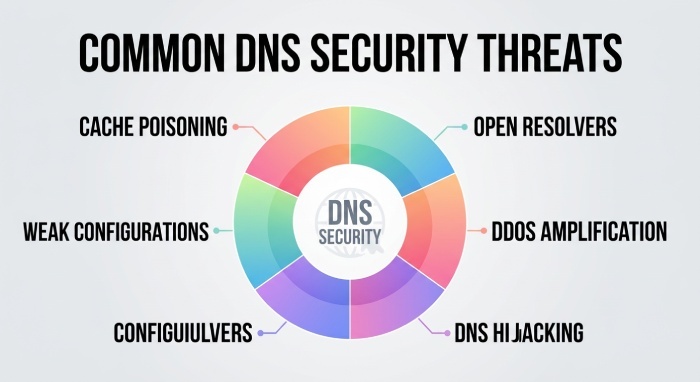
Common DNS Vulnerabilities That Put Networks at Risk
Several DNS-related weaknesses continue to affect organizations worldwide. Some attacks rely on technical flaws, while others succeed because of configuration mistakes or poor security practices.
1. Open DNS Resolvers
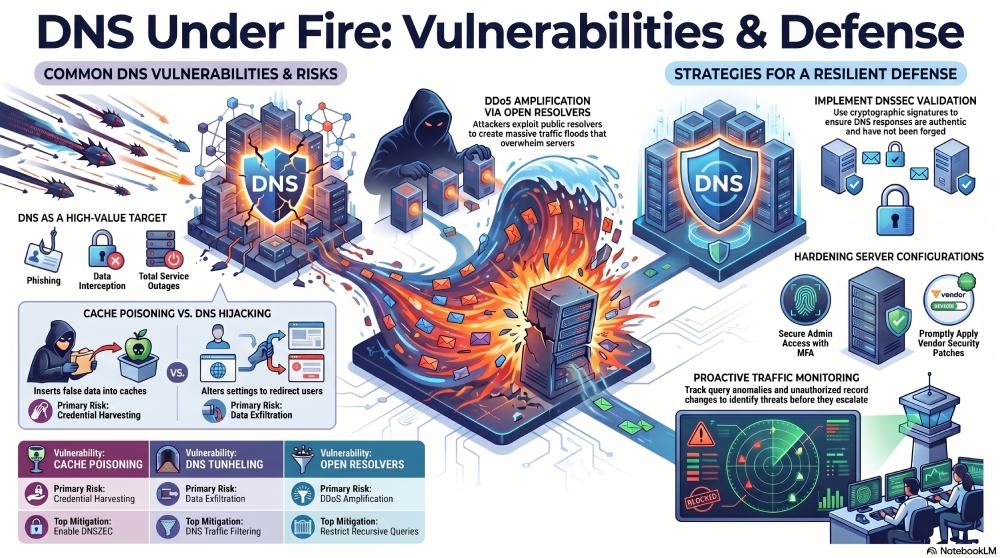
An open DNS resolver accepts queries from any external source on the internet instead of limiting requests to authorized users. Attackers often abuse these publicly accessible resolvers to amplify traffic during distributed denial-of-service attacks.
In a DNS amplification attack, attackers send small spoofed requests that generate much larger responses directed toward the victim. This creates massive traffic floods capable of overwhelming servers and disrupting services.
Risks Associated with Open Resolvers
- DDoS amplification attacks
- Increased bandwidth consumption
- Network performance degradation
- Infrastructure abuse by attackers
- Higher operational costs
How to Reduce the Risk
- Restrict recursive DNS queries to trusted networks
- Disable public access where unnecessary
- Apply access control lists (ACLs)
- Monitor abnormal traffic spikes
- Regularly audit resolver configurations
2. DNS Cache Poisoning
DNS cache poisoning occurs when false DNS information is inserted into a resolver cache. Once poisoned data is stored, users may unknowingly be redirected to malicious websites even when entering legitimate domain names.
Attackers commonly use this technique to steal login credentials, distribute malware, or intercept sensitive communications.
Effects of Cache Poisoning
- Redirected website traffic
- Credential harvesting
- Malware infections
- Financial fraud
- Loss of customer confidence
Prevention Strategies
- Enable DNSSEC validation
- Keep DNS software updated
- Randomize source ports and query IDs
- Reduce cache exposure
- Monitor suspicious DNS responses
3. Lack of DNSSEC Implementation
DNSSEC, or Domain Name System Security Extensions, helps validate DNS responses through cryptographic signatures. Without DNSSEC, attackers may forge DNS responses and manipulate traffic without detection.
Organizations that do not deploy DNSSEC leave themselves more vulnerable to spoofing attacks and forged DNS records.
Benefits of DNSSEC
- Improves DNS data authenticity
- Reduces spoofing risks
- Helps prevent forged responses
- Strengthens trust in DNS communication
Challenges of DNSSEC
Although DNSSEC improves integrity, poor implementation can introduce operational complexity. Improper configurations may lead to validation failures or service interruptions.
Best Practices
- Properly sign DNS zones
- Monitor DNSSEC validation
- Rotate keys securely
- Use supported DNS providers
- Test configurations before deployment
4. DNS Tunneling
DNS tunneling allows attackers to hide malicious communications inside DNS queries and responses. Since DNS traffic is often trusted and allowed through firewalls, attackers can use tunneling to bypass security controls.
Cybercriminals frequently use DNS tunneling for:
- Data exfiltration
- Malware command-and-control traffic
- Remote access communication
- Covert network activity
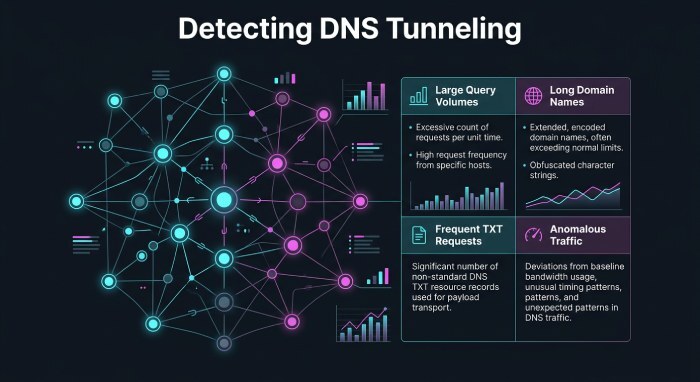
Signs of DNS Tunneling Activity
- Large DNS query volumes
- Unusually long domain names
- Frequent TXT record requests
- Suspicious outbound DNS traffic
- Repetitive query patterns
How to Detect and Prevent It
- Monitor DNS traffic behavior
- Block suspicious outbound requests
- Implement DNS filtering
- Use intrusion detection systems
- Analyze abnormal DNS query lengths
5. Weak DNS Server Configurations
Improperly configured DNS servers remain one of the most common causes of DNS-related security incidents. Default settings, outdated software, unnecessary services, and exposed administrative interfaces all increase risk.
Common Configuration Problems
- Public zone transfers
- Weak access permissions
- Unpatched DNS software
- Insecure management interfaces
- Excessive recursion permissions
Recommended Security Measures
- Disable unused services
- Apply regular software updates
- Restrict administrative access
- Use strong authentication controls
- Conduct periodic configuration reviews
6. Distributed Denial-of-Service (DDoS) Attacks
DNS infrastructure is frequently targeted by DDoS attacks designed to overwhelm servers with excessive traffic. DNS-based DDoS attacks can disrupt websites, applications, and email services.
Attackers often combine botnets with amplification techniques to increase attack size dramatically.
Consequences of DNS DDoS Attacks
- Website outages
- Service disruptions
- Revenue loss
- Reduced customer trust
- Increased recovery expenses
Mitigation Techniques
- Use DDoS protection services
- Deploy traffic filtering
- Implement rate limiting
- Use redundant DNS providers
- Distribute infrastructure geographically
7. DNS Hijacking
DNS hijacking occurs when attackers alter DNS settings to redirect users to unauthorized destinations. This can happen through compromised routers, stolen registrar credentials, malware infections, or unauthorized DNS changes.
Potential Outcomes
- Fake login pages
- Malware delivery
- Credential theft
- Traffic interception
- Brand impersonation
Prevention Tips
- Secure registrar accounts with MFA
- Monitor DNS record changes
- Lock critical domains
- Audit administrative access
- Use secure password practices
8. Vulnerable DNS Protocols and Software
Outdated DNS software may contain security flaws that attackers can exploit to gain unauthorized access, crash services, or manipulate DNS responses.
DNS vulnerabilities are regularly discovered in widely used platforms, making software updates critical for maintaining security.
Risks of Unpatched DNS Systems
- Remote code execution
- Service crashes
- Cache poisoning
- Memory corruption
- Unauthorized access
Security Recommendations
- Apply vendor patches promptly
- Track vulnerability advisories
- Remove unsupported software
- Conduct vulnerability assessments
- Test systems regularly
The Business Impact of DNS Attacks
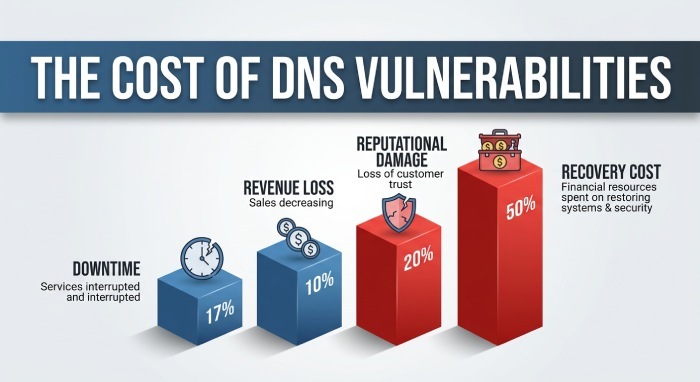
DNS attacks can create severe operational and financial consequences for businesses of all sizes. Even short disruptions may affect productivity, customer experience, and online revenue.
Financial Risks
- Downtime costs
- Incident response expenses
- Regulatory penalties
- Lost transactions
- Increased recovery spending
Reputational Damage
Customers expect websites and online services to remain available and secure. DNS-related incidents can weaken customer confidence and damage brand reputation.
Operational Disruption
DNS outages may interrupt:
- Email communication
- Remote access systems
- Cloud applications
- Online transactions
- Internal business operations
DNS Monitoring and Visibility
Continuous DNS monitoring helps organizations identify suspicious behavior before it escalates into a major incident. Visibility into DNS activity allows security teams to detect unusual changes, unauthorized record modifications, or traffic anomalies.
What Organizations Should Monitor
- DNS record changes
- Resolver activity
- Failed DNS lookups
- Traffic spikes
- Query anomalies
- Unauthorized configuration updates
Benefits of DNS Monitoring
- Faster incident detection
- Improved troubleshooting
- Better threat visibility
- Reduced downtime
- Stronger compliance support
Best Practices for Strengthening DNS Security
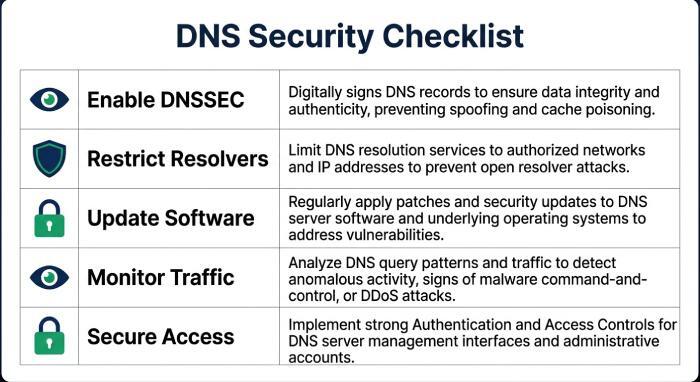
A strong DNS security strategy combines configuration hardening, monitoring, access control, and proactive maintenance.
Recommended DNS Security Practices
- Enable DNSSEC: DNSSEC helps validate DNS responses and reduce spoofing risks.
- Restrict Resolver Access: Avoid exposing recursive resolvers to the public internet unless absolutely necessary.
- Use Redundant DNS Providers: Redundant infrastructure improves availability during outages or attacks.
- Monitor DNS Activity: Regular monitoring helps identify suspicious traffic and unauthorized changes.
- Keep Software Updated|: Apply security patches promptly to reduce exposure to known vulnerabilities.
- Secure Administrative Access: Use strong passwords, multi-factor authentication, and restricted access controls.
- Audit DNS Configurations Regularly: Routine reviews help identify outdated settings, unused services, and security gaps.
- Implement Traffic Filtering: DNS filtering can block access to malicious domains and reduce exposure to threats.
DNS Security and Email Protection
DNS also plays a major role in email authentication technologies such as SPF, DKIM, and DMARC. Improper DNS configurations may weaken email security and increase exposure to phishing or spoofing attacks.
Organizations should regularly review email-related DNS records to ensure proper authentication policies are in place.
Important Email Authentication Protocols
- SPF (Sender Policy Framework)
- DKIM (DomainKeys Identified Mail)
- DMARC (Domain-based Message Authentication, Reporting, and Conformance)
Correctly configured DNS records help improve email security, protect domain reputation, and reduce spoofing attempts.
Future DNS Security Challenges
As cyber threats continue evolving, DNS infrastructure will remain a major attack target. Cloud adoption, remote work, IoT expansion, and growing internet dependency all increase the importance of DNS security.
Emerging threats may include:
- More advanced DNS tunneling techniques
- AI-driven phishing infrastructure
- Sophisticated amplification attacks
- Automated DNS exploitation
- Supply chain attacks targeting DNS providers
Organizations that fail to modernize DNS security practices may face increasing exposure over time.
Final Thoughts
DNS security is often overlooked despite its critical importance to internet operations. Weak DNS protections can expose organizations to phishing attacks, service disruptions, malware distribution, and traffic manipulation. Since DNS supports websites, applications, and email communication, even a single vulnerability can create widespread operational problems.
Reducing DNS risk requires a combination of secure configurations, software updates, DNSSEC deployment, monitoring, and access controls. Organizations that proactively strengthen DNS infrastructure are better positioned to prevent attacks, maintain service availability, and protect sensitive information from evolving cyber threats.
General Manager
General Manager at DuoCircle. Product strategy and commercial lead across the email security portfolio.
Secure your email infrastructure
Protect, authenticate, and deliver. Contact our team to find the right solution.