GDPR Consent Emails For B2B Marketing What You Need To Know

Quick Answer
GDPR consent emails for B2B marketing help businesses obtain valid permission before sending marketing communications. Learn when consent is required, GDPR compliance rules, best practices, common mistakes to avoid, and how to improve email deliverability while protecting customer privacy.
In the current landscape where privacy is paramount, adherence to GDPR regulations has become essential for companies targeting customers within the European Union (EU). There is a prevalent misconception among many B2B marketers that GDPR stipulations are less stringent for business contacts compared to individual consumers. However, this is not the case. Whether you are reaching out to decision-makers, executives, procurement specialists, or IT personnel, your consent approach will significantly influence your email deliverability, engagement rates, and legal adherence.
GDPR-compliant consent emails are vital for organizations seeking explicit permission prior to dispatching marketing messages. When crafted effectively, these emails not only comply with legal standards but also foster trust, enhance the quality of your email lists, and promote sustained engagement over time.
This guide provides comprehensive insights for B2B marketers regarding GDPR consent emails, detailing when consent is necessary, outlining best practices, highlighting common pitfalls, and offering strategies for developing effective and compliant marketing campaigns.
What Are GDPR Consent Emails?
GDPR consent emails are communications directed at contacts, requesting their explicit approval to continue receiving marketing messages.
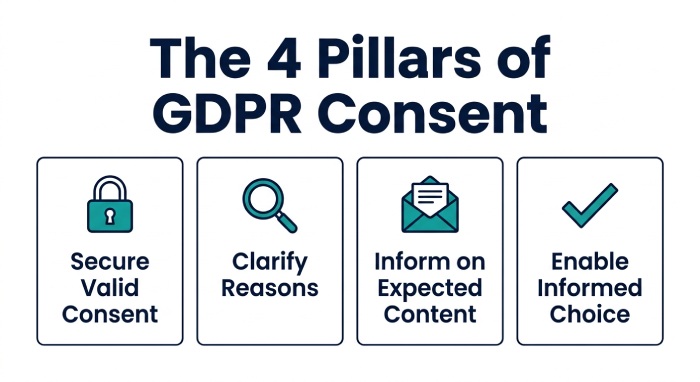
In contrast to promotional emails, the primary purpose of these messages is to:
- Secure valid consent
- Clarify the reasons for seeking permission
- Inform recipients about the content they can expect
- Enable recipients to make an informed choice
The intent of a GDPR consent email is not to promote a product, but rather to foster a clear and open connection between your business and your audience.
What GDPR Means for B2B Marketing Emails
The General Data Protection Regulation (GDPR) is relevant to B2B email marketing whenever a business handles personal data pertaining to identifiable individuals within the European Union. Information like a work email address (e.g., firstname.lastname@company.com), job titles, LinkedIn profiles, IP addresses, or records of interactions can qualify as personal data if they can identify an individual.
For B2B marketers, adhering to GDPR extends beyond simply incorporating an unsubscribe link. It necessitates establishing a legitimate basis for processing personal data, ensuring clear transparency, honoring privacy rights, and maintaining documented decisions regarding data protection. Companies sending newsletters, lead-nurture campaigns, webinar invitations, or other forms of direct marketing typically operate as data controllers, meaning they determine the purpose and method of personal data use.
Moreover, GDPR is complemented by the ePrivacy Directive, formally known as Directive 2002/58/EC. While GDPR addresses data processing broadly, the ePrivacy Directive specifically governs electronic mail marketing, cookies, and related communication protocols. In many EU member states, ePrivacy regulations dictate whether consent is necessary prior to dispatching marketing emails. Although a proposed ePrivacy Regulation may update this framework in the future, the current ePrivacy Directive remains essential for email compliance.
When Is Consent Required in B2B Email Marketing?
The necessity for consent is influenced by various considerations.
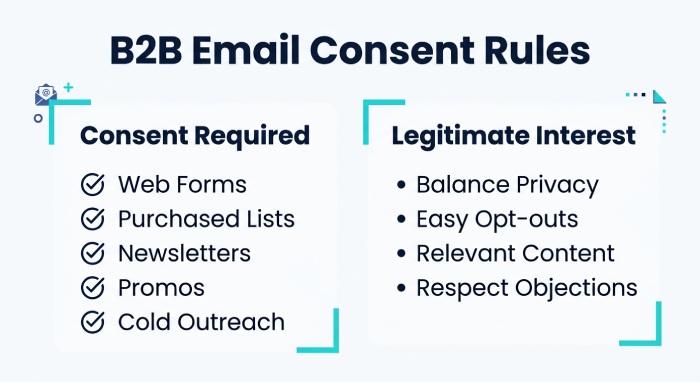
Generally, you’ll need consent if:
- You collected contacts from website forms
- You purchased email lists
- You’re sending newsletters
- You’re promoting products or services
- You’re targeting individuals you’ve never interacted with
Nevertheless, certain nations acknowledge that legitimate interest applies to specific B2B communications.
Even then, businesses must:
- Balance their interests against individual privacy
- Offer easy opt-outs
- Keep marketing relevant
- Respect objections immediately
GDPR operates in conjunction with local privacy regulations, including the ePrivacy Directive, which can result in varying requirements among EU member nations.
Why GDPR Consent Is Important for B2B Marketing
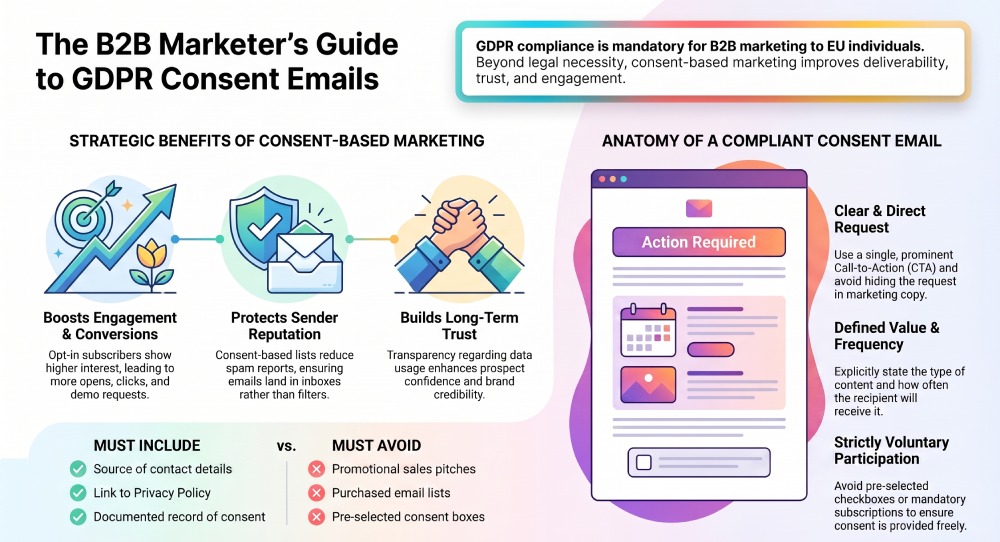
Many organizations view GDPR consent merely as a legal obligation. Although compliance is crucial, securing explicit approval from your audience offers considerable marketing advantages. It fosters stronger relationships, enhances campaign effectiveness, and connects with prospects genuinely interested in your offerings.
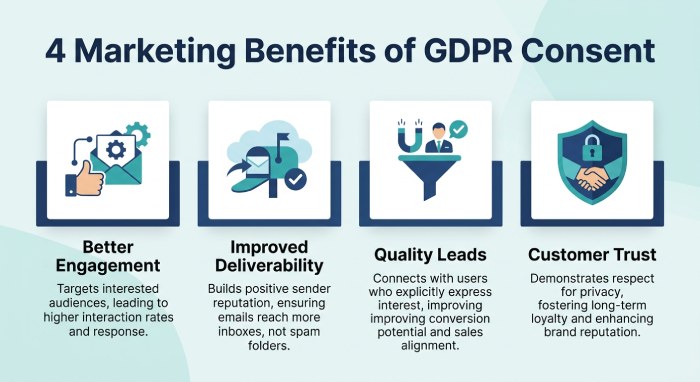
Drives Better Email Engagement
When individuals opt in to receive your emails, they generally exhibit a greater interest in your content. Such subscribers are more inclined to open your messages, engage with links, access resources, request product demonstrations, and ultimately convert to paying customers. Because they have already shown interest in your brand, permission-based email campaigns tend to yield significantly higher engagement compared to emails sent to purchased or outdated lists.
Improves Email Deliverability
An email list built on consent enhances overall email effectiveness. When subscribers anticipate your communications, they are less inclined to report them as spam or opt out promptly. This leads to a robust sender reputation, ensuring that a greater number of your emails successfully land in inboxes rather than being diverted to spam folders. Email service providers prioritize senders that regularly achieve positive engagement and uphold well-maintained mailing lists.
Attracts Higher-Quality Leads
Building an extensive contact database may not always be the most effective approach. In fact, a more focused list of individuals who have expressly opted in can yield significantly superior outcomes compared to a large pool of unverified or disinterested contacts. Because these subscribers have demonstrated a genuine interest in your offerings, they are more inclined to become qualified leads and loyal customers over time.
Builds Customer Trust
One of the key benefits of adhering to GDPR regulations is the emphasis on transparency. By clearly communicating the reasons for collecting personal data, outlining its intended use, and allowing individuals to manage their preferences, organizations show a commitment to respecting privacy. This level of openness fosters trust, which in turn enhances prospects’ confidence in interacting with your brand and responding positively to future marketing efforts.
Key Components Every GDPR Consent Email Should Include
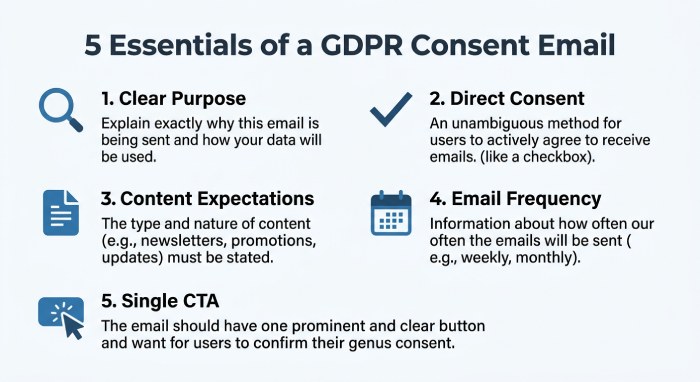
A GDPR consent email should be transparent, informative, and easy for recipients to act on. Including the right elements not only helps you comply with GDPR requirements but also builds trust and encourages higher engagement.
Clearly Explain Why You’re Reaching Out
Recipients need to quickly understand the purpose of your email. Steer clear of vague or overly broad introductions that might confuse them.
Instead, clearly outline the following:
- The source of their contact details
- The reason for your outreach
- The nature of the emails they can expect if they decide to subscribe
Being forthright about your intentions fosters transparency, which is a key aspect of GDPR compliance.
Ask for Consent in a Direct Way
It is essential that your request for consent is unmistakable and prominently displayed. Instead of embedding it within marketing materials, directly inquire whether recipients wish to remain subscribed to your communications.
For instance:
“Are you interested in continuing to receive our latest product updates, expert insights, and valuable resources?”
Utilizing clear and direct language allows recipients to make a well-informed choice.
Tell Subscribers What They’ll Receive
Individuals are more inclined to participate when they have a clear understanding of what they are agreeing to. It is essential to explicitly define the content types that will be provided, which may encompass:
- Product announcements and updates
- Informative articles and guides
- News and trends relevant to the industry
- Invitations to webinars and events
- Whitepapers and resources for download
- Security alerts or significant service notifications, when applicable
Establishing these expectations from the outset fosters trust and minimizes the likelihood of future unsubscribes.
Mention How Frequently You’ll Email
Inform recipients about the frequency of your communications to avoid unexpected updates and to create realistic expectations.
Your email schedule could include:
- Weekly
- Monthly
- Quarterly
- Intermittently for significant updates
Clearly communicating your email frequency can greatly minimize spam complaints and enhance subscriber satisfaction.
Include One Clear Call-to-Action
An effective consent email should direct recipients to take one specific action. It is advisable to include a single, clear call-to-action (CTA) rather than offering various competing choices.
Examples of compelling CTAs are:
- Continue My Subscription
- Yes, Please Send Updates
- Confirm My Subscription
- Keep Me Informed
By using a focused CTA, you simplify the response process for your audience.
Best Practices for Creating GDPR Consent Emails
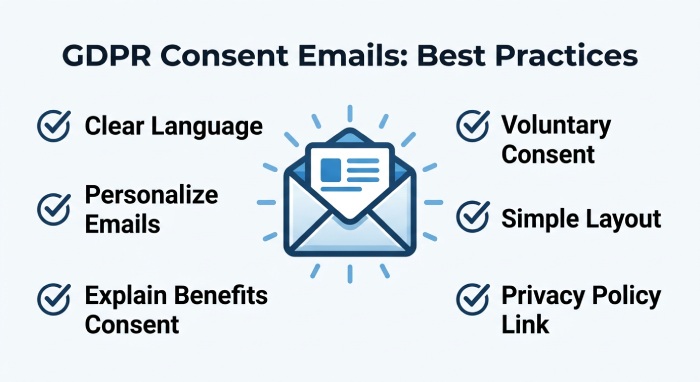
Use Clear and Simple Language
Your consent email should be clear and accessible to all recipients. Refrain from using complicated legal jargon or technical terms that could lead to confusion. Opt for a friendly, conversational style that articulates your request in an understandable manner. Simple and direct communication fosters trust and is likely to elicit a favorable response from a wider audience.
Add Personalization Where Appropriate
A tailored email offers greater relevance and engagement compared to a standard message. If you possess accurate information about the recipient, leverage it judiciously to enhance the overall experience.
You can personalize your email by including:
- The recipient’s name
- Their company or organization
- Industry or business type
- Previous interactions with your brand
- Resources they have previously downloaded
Individuals are more inclined to give their consent when they encounter content that aligns with their interests or previous interactions.
Explain the Benefits of Subscribing
Rather than merely seeking consent, articulate the benefits of maintaining a connection. Clearly outline the valuable content that subscribers can look forward to receiving.
Examples of subscriber benefits include:
- Exclusive industry reports
- Practical expert advice
- Product updates and best practices
- Email security and cybersecurity news
- GDPR and compliance guidance
- Customer success stories and case studies
Individuals are significantly more inclined to participate when they grasp the benefits they will gain.
Ensure Consent Is Truly Voluntary
The GDPR mandates that consent must be provided voluntarily and without coercion. Therefore, your email communications should not create a sense of obligation for individuals to subscribe.
Avoid practices such as:
- Pre-selected consent checkboxes
- Mandatory subscriptions
- Consent requests hidden within lengthy text
Instead, offer a straightforward option that allows recipients to choose if they wish to receive communications from you.
Keep the Email Layout Simple
An orderly and clear design enhances the clarity of your message. Remove any extraneous elements to allow recipients to swiftly grasp the email’s intent.
Your design should emphasize:
- A clear explanation of your request
- A visible call-to-action (CTA)
- Easy-to-find privacy information
Maintaining a clean and organized layout enhances user experience and has the potential to boost conversion rates.
Include a Link to Your Privacy Policy
All GDPR consent emails must include a link to your privacy policy. This ensures that recipients can review how their personal data will be managed prior to providing their consent.
Your privacy policy should clearly explain:
- What personal data you collect
- How the information is stored
- How the data is processed
- Whether it is shared with third parties
- How long it is retained
- The individual’s privacy rights
Facilitating straightforward access to this information showcases openness and reinforces confidence in your organization.
Common GDPR Consent Email Mistakes to Avoid
Even well-meaning businesses can err in sending GDPR consent emails. Minor mistakes in requesting or managing consent may result in compliance challenges and diminish customer trust. Recognizing these frequent missteps can enhance your email strategy’s effectiveness and legal adherence.
Turning the Email Into a Marketing Pitch
The primary goal of a GDPR consent email is to seek permission to communicate with recipients. It should avoid promotional content or sales pitches, focusing instead on obtaining clear consent while minimizing any marketing material.
Relying on Purchased Email Lists
Leveraging third-party email databases can pose significant GDPR compliance risks. Often, it’s difficult to verify if individuals on those lists have legitimately consented to receive marketing communications from your organization. Creating your own opt-in list is a more secure and sustainable strategy.
Making the Consent Request Difficult to Find
Requests for consent must be straightforward and accessible. They should not be obscured within lengthy text, complicated legal jargon, or an overload of details. Providing a clear and prominent call to action enables recipients to make well-informed choices and enhances transparency.
Failing to Maintain Consent Records
Securing consent is just one aspect of the procedure. Organizations must also maintain precise records detailing when and how approval was granted. Effective documentation generally encompasses:
- The date and time consent was provided
- The method used to collect consent
- The specific communications the recipient agreed to receive
- The version of the consent statement presented at the time
Keeping these records supports compliance verification if your practices are challenged.
Continuing to Email After Consent Is Withdrawn
Under GDPR, individuals have the right to withdraw their consent whenever they choose. Once a recipient unsubscribes or revokes permission, their request should be honored without delay. Continuing to send marketing emails after consent has been withdrawn can result in GDPR violations and damage your organization’s reputation.
GDPR consent emails are more than a compliance requirement—they help businesses build trusted relationships, maintain healthier mailing lists, and improve email deliverability. When combined with strong email authentication technologies such as SPF, DKIM, and DMARC, permission-based marketing creates a more secure and effective email program. Organizations that prioritize both privacy compliance and email security are better positioned to achieve long-term marketing success.
General Manager
General Manager at DuoCircle. Product strategy and commercial lead across the email security portfolio.
Secure your email infrastructure
Protect, authenticate, and deliver. Contact our team to find the right solution.