Honey Trap Scams: How Cybercriminals Exploit Trust and How to Avoid Them

Quick Answer
A honey trap scam is a social engineering attack where criminals use romance, trust, or personal attention to manipulate victims. After building an emotional connection, they may steal money, personal data, login credentials, or persuade victims to invest in fake opportunities.
What Honey Trap Scams Are and Why They Work
The basic definition
A honey trap scam is a form of social engineering in which a fraudster uses romance, attraction, admiration, or personal attention to gain a victim trust. Unlike many online scams that rely on obvious fake prizes or malicious links, a honey trap scam is built around an emotional bond. The criminal may pose as a romantic interest, recruiter, investor, influencer, military member, executive, or lonely professional.
In many cases, the scheme overlaps with a romantic scam, where the attacker uses affectionate messages, flattery, and long conversations to create dependency. This can happen on dating platforms such as Tinder, Bumble, and Match.com, or through social media sites like Instagram, Facebook, TikTok, and Snapchat. Once trust is established, the attacker may push the victim toward financial fraud, phishing, extortion, or disclosure of sensitive data.
Why trust makes the scam effective
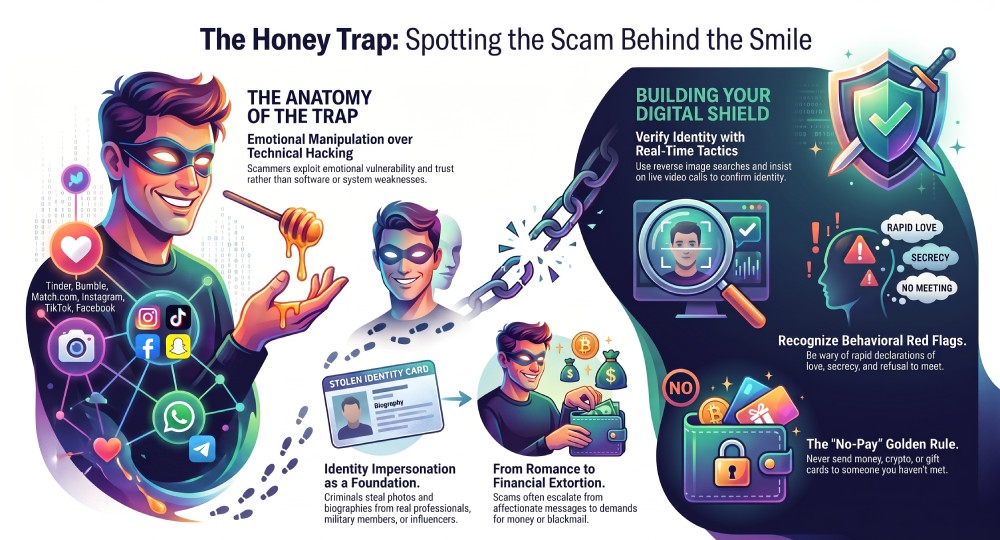
A honey trap scam works because it targets emotional vulnerability rather than technical weakness. Victims are not careless they are being manipulated by calculated cybercriminal tactics. The attacker studies the person, mirrors their interests, and gradually creates a fabricated identity that feels believable.
Emotional manipulation over technical hacking
This is why emotional manipulation is central to the scammer playbook. A criminal may send daily affectionate messages, claim shared values, or describe an exaggerated lifestyle to appear desirable. Over time, the victim becomes less likely to question suspicious behavior, even when the story seems too good to be true.
Identity impersonation as the foundation
Many cases involve identity impersonation, where criminals steal photos, names, job titles, or biographies from real people. This may become an impersonation attack against a private individual, celebrity, service member, entrepreneur, or company executive. The same principles appear in business email compromise, where attackers impersonate trusted colleagues to redirect payments.
Common Tactics Cybercriminals Use to Build Trust
Fake profiles and fabricated stories
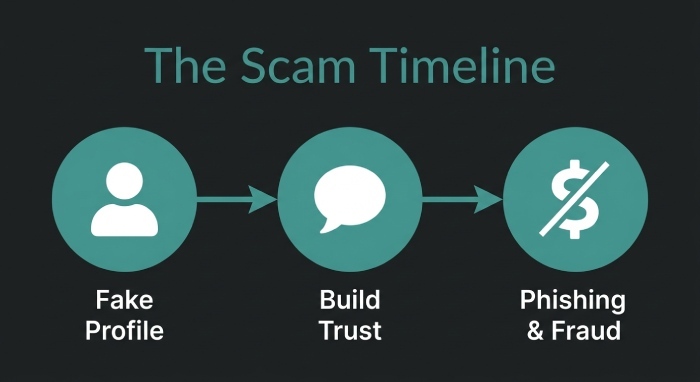
A common honey trap scam begins with a fake profile on dating apps, chat services, or messaging apps such as WhatsApp and Telegram. The profile may include attractive photos, a prestigious job, vague personal details, and a backstory designed to explain why the person cannot meet.
Attackers often avoid profile verification and operate through unverified accounts. They may claim to work overseas, serve in the military, travel frequently, or be involved in cryptocurrency, luxury sales, or international business. These details make video call avoidance seem plausible.
Reverse image search can expose stolen photos
A reverse image search can reveal whether profile photos were copied from Instagram, Facebook, YouTube, or another public source. If the same image appears under multiple names, it may indicate identity impersonation or a wider impersonation attack.
Phishing, links, and credential theft
A honey trap scam may evolve into phishing once trust is established. The attacker might send a link to a private album, fake investment portal, travel document, crypto dashboard, or verification page. These pages may harvest passwords, payment details, or personal information.
This kind of phishing is especially dangerous because the message comes from someone the victim believes they know. It is social engineering disguised as intimacy. In some cases, stolen credentials are later used for financial fraud, account takeover, or further online scams.
Email authentication does not stop every scam
Organizations use SPF, DKIM, and DMARC to reduce email spoofing and business email compromise. While these technologies strengthen email security, honey trap scams often occur through social media, dating platforms, or messaging apps, where users must rely on awareness and verification rather than email authentication alone.
Can Honey Trap Scams Start Through Email?
Although many honey trap scams begin on social media or dating platforms, some attackers use phishing emails that impersonate recruiters, executives, or business contacts to establish trust. Email security technologies such as SPF, DKIM, and DMARC help reduce spoofed emails, while secure email filtering can identify malicious links and suspicious messages before they reach users.
Money requests and pressure tactics
Eventually, many fraudsters introduce requests for money. This may appear as a medical emergency, travel problem, customs fee, frozen account, investment opportunity, or money transfer scam. The victim may be told to send funds through wire transfer, gift cards, cryptocurrency, or payment apps.
Urgency tactics and financial temptation
Attackers use urgency tactics, pressure tactics, and financial temptation to make victims act quickly. They may claim an investment will disappear, a visa will expire, or a family member is in danger. These cybercriminal tactics are designed to bypass rational review.
Warning Signs You’re Being Targeted
Behavioral red flags
Important warning signs include rapid declarations of love, constant affectionate messages, refusal to meet, inconsistent stories, and repeated excuses for video call avoidance. If someone you met online pushes secrecy, discourages you from speaking with friends, or asks you to move from dating platforms to encrypted messaging apps immediately, treat it as suspicious behavior.
A romantic scam often escalates quickly. The person may claim destiny, exclusivity, or emotional crisis within days. This emotional manipulation is not accidental; it is part of the scammer playbook.
Watch for vague personal details
Be cautious if the person provides vague personal details, avoids answering direct questions, or becomes defensive when asked for real-time verification. A legitimate person should not object to reasonable safety steps.
Digital and financial red flags
A honey trap scam may include links, attachments, QR codes, or requests to log into unfamiliar services. That can indicate phishing or an attempt to collect sensitive data. If the person requests bank information, identity documents, workplace credentials, or one-time passcodes, you may be facing an impersonation attack or broader financial fraud scheme.
Trust your instincts
If something feels wrong, trust your instincts. Genuine relationships do not require secrecy, threats, or immediate payments. Contact with strangers online should remain cautious until identity, intent, and context are verified.
Real-World Consequences: Financial, Emotional, and Data Risks
Financial losses and fraud escalation
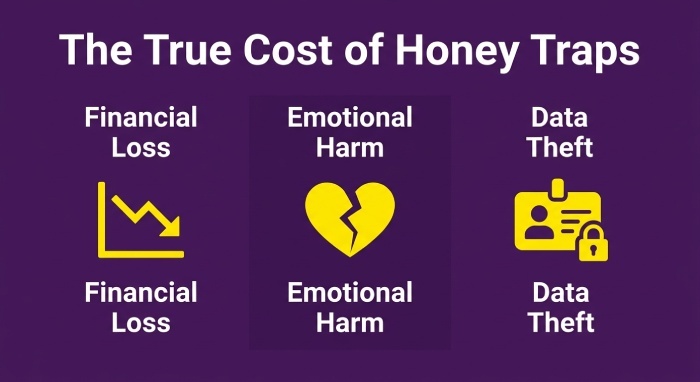
The FBI IC3 has repeatedly warned that romance-related online scams generate massive losses each year. The IC3 Report frequently documents victims losing savings, retirement funds, or business assets to financial fraud. A honey trap scam may start as flirtation but become a devastating romantic scam involving loans, crypto investments, or wire transfers.
Netflix The Tinder Swindler showed how an exaggerated lifestyle, luxury imagery, and manufactured emergencies can drive victims into debt. While that story became famous, similar cybercriminal tactics happen daily on Tinder, Bumble, Match.com, Instagram, and Facebook.
Emotional harm and extortion
The damage is not only monetary. Victims often experience shame, grief, anxiety, and isolation after discovering the fabricated identity. In more severe cases, attackers use intimate photos, private conversations, or recorded calls for extortion. They may make threats to expose content unless more money is paid.
This is another form of emotional manipulation. A romantic scam can turn into coercion, blackmail, and reputational harm. Public resources from organizations such as the FBI, CISA, and university cybersecurity programs provide useful guidance on recognizing scams and protecting personal information.
Data exposure and impersonation
When victims share documents, passwords, or workplace information, the result can be compromised personal info. That data may be reused for identity impersonation, loan applications, account takeover, or targeted phishing. In corporate settings, stolen trust can support business email compromise and vendor payment fraud.
How to Protect Yourself and Respond if You are Caught
Prevention steps before trust is established
Strong prevention begins with skepticism and safer habits. Limit public personal information, review privacy settings, and avoid sharing your workplace, travel routine, family details, or financial status with new contacts. Use platform reporting tools when you see suspicious accounts.
Verify identity early
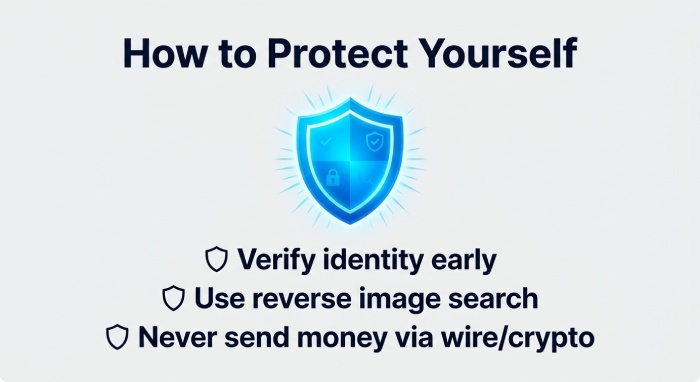
Ask for real-time verification, such as a live video call with natural conversation. Use reverse image search, compare profile history, and check whether the account has genuine interactions over time. Be cautious of unverified accounts and anyone who refuses reasonable verification.
Avoid sending money
The safest rule is simple: avoid sending money to someone you have not met and independently verified. This includes crypto, wire transfers, gift cards, temporary loans, and investment deposits. A honey trap scam often depends on small initial payments that escalate into larger financial fraud.
What to do if you suspect a scam
If you believe you are being targeted, stop communication, preserve evidence, and do not confront the scammer aggressively. Save messages, usernames, wallet addresses, phone numbers, email headers, and transaction records. Report the account to Tinder, Bumble, Match.com, Instagram, Facebook, TikTok, Snapchat, WhatsApp, Telegram, or the relevant service.
File a report with the FBI’s IC3 if money, credentials, or identity documents were involved. Contact your bank immediately if payments were made. Change passwords, enable multifactor authentication, and monitor accounts for signs of identity impersonation.
Protect yourself after exposure
To protect yourself, assume any shared information may be misused. Freeze credit if identity documents were sent, warn your employer if work credentials were exposed, and consider legal guidance if extortion is involved. Secure digital interactions require both technical safeguards and emotional awareness, because the most effective online scams combine social engineering, impersonation attack methods, and human trust.
Honey trap scams succeed because they exploit human trust rather than software vulnerabilities. While technologies like SPF, DKIM, and DMARC strengthen email security, awareness remains the strongest defense against emotionally driven social engineering attacks. Verifying identities, questioning unexpected requests, and avoiding impulsive decisions can help individuals and organizations stay protected.
General Manager
General Manager at DuoCircle. Product strategy and commercial lead across the email security portfolio.
Secure your email infrastructure
Protect, authenticate, and deliver. Contact our team to find the right solution.