Improving Facility Management CMMS Use For Compliance Outcomes

Quick Answer
A facility management CMMS supports compliance by automating inspections, scheduling preventive maintenance, tracking corrective actions, and centralizing maintenance records. It helps teams meet regulatory requirements, reduce compliance risks, and maintain audit-ready documentation.
Facility compliance depends on repeatable inspections, complete work records, and clear ownership. Paper forms and scattered spreadsheets obscure overdue tasks, weaken audit trails, and slow corrective action. A computerized maintenance management system (CMMS) brings those activities into one controlled workflow. Disciplined setup, consistent field use, and regular review drive better results. Robust data protection, cybersecurity, and email security measures play a crucial role in protecting maintenance logs and operational data. The following practices show how facility teams can connect daily maintenance work with measurable compliance evidence and clear accountability.
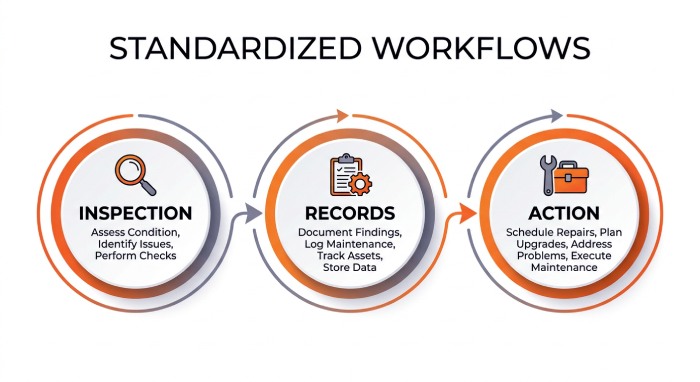
Compliance work starts with a reliable record of each asset, location, inspection, and assigned duty. A facility management CMMS connects those records with work orders, checklists, procedures, and inspection history, so supervisors can trace what happened and when. That foundation makes the next step, mapping obligations to routine tasks, much easier.
Build Compliance Into Workflows
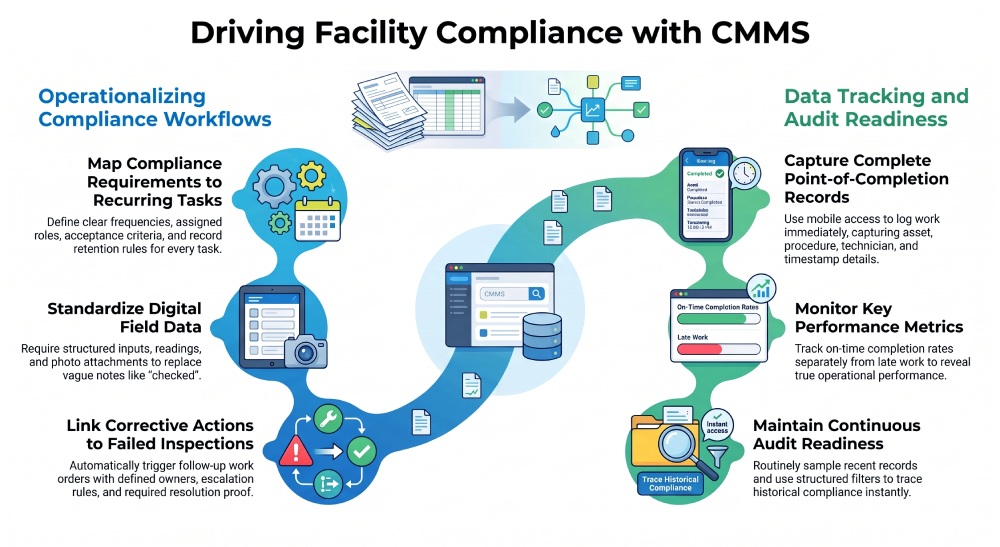
Map each requirement to a task with a defined frequency, responsible role, acceptance criteria, and record retention period. A facility manager can then create recurring work orders for inspections, testing, servicing, and documentation reviews.
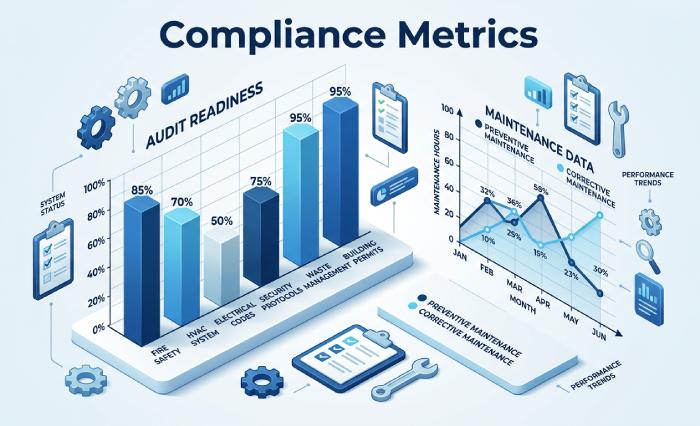
A clear workflow also assigns corrective action when an inspection fails. The record should identify the defect, responsible employee, due date, resolution, and verification step. This structure prevents an inspection from ending with a simple pass-or-fail entry that hides an unresolved risk.
Work order priorities should reflect safety and compliance impact. A failed emergency system inspection requires faster escalation than a minor cosmetic repair. Priority rules help dispatchers assign labor based on risk, not arrival order.
Standardize Inspections And Corrective Action
Digital checklists should use consistent questions, response types, and required evidence. A checklist can require a pass-or-fail response, a measurement, a photo, or a written note when conditions need explanation.
Standard fields make results easier to compare across buildings, shifts, and technicians. They also reduce vague entries such as “checked” or “looks good,” which provide little support during an audit.
Corrective actions need their own records rather than relying on notes inside an inspection. The system should create a linked work order when a failed response requires repair, replacement, isolation, or follow-up testing. Closing the action should require documented proof that the condition was corrected.
Preserve Complete Records
An auditor needs more than a completion date. Each record should show the asset, location, task, technician, procedure used, findings, attachments, approval, and closeout time.
A CMMS improves traceability when employees record work at the point of completion. Mobile access lets technicians view procedures, enter readings, attach photos, and submit results without transcribing paper notes later.
Permissions also protect record quality. Supervisors should control procedure changes, checklist edits, and work-order closure rules. A change history should show who updated a record and when, especially for recurring compliance tasks.
Use Preventive Maintenance Data
Preventive maintenance schedules connect manufacturer instructions, internal standards, and regulatory duties to planned work. Managers should base frequencies on applicable requirements, asset history, operating conditions, and documented risk assessment.
Missed preventive tasks need immediate visibility. A dashboard or report can show overdue work by building, asset class, responsible team, and risk category. Managers can then correct scheduling gaps before an inspection exposes them.
Maintenance history also helps teams identify repeated failures. If the same asset generates recurring corrective work, the manager can review the procedure, interval, parts history, and technician findings. That review often reveals a need for a revised task or additional inspection point.
Review Compliance Metrics
Useful metrics connect work activity with control performance. Facility teams can monitor inspection completion by due date, overdue corrective actions, repeat failures, preventive maintenance compliance, and average time to close findings.
A metric needs a defined calculation and a consistent reporting period. For example, inspection completion should distinguish tasks completed on time from tasks completed late. Without that distinction, a high completion count can hide poor schedule performance.
Managers should review trends at a set interval and assign follow-up actions. A monthly review can identify recurring overdue locations, underused checklists, and procedures that create frequent failures. Each decision should produce an owner and a due date inside the same work management process.
Prepare For Audits Continuously
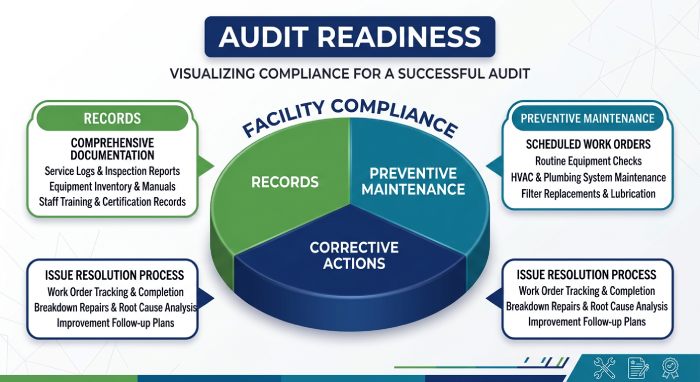
Audit preparation works best as a routine review, not a rushed document search. Managers should sample recent inspections, verify linked corrective actions, check required attachments, and confirm that approved procedures match current practice.
A searchable inspection history reduces time spent locating evidence. Filters for location, asset, date, technician, and result help managers answer auditor questions with records instead of recollection.
Training also requires documentation. New employees should learn how to complete checklists, record findings, escalate failures, and close work orders. Supervisors should review early submissions for accuracy and correct weak entries before they become repeated habits.
Conclusion
A facility team improves compliance outcomes when the CMMS reflects the real control process. Requirements need assigned tasks, inspections need consistent evidence, failures need linked corrective action, and managers need timely metrics. The practical next step is a focused record review: select one compliance area, trace several recent tasks from schedule through closeout, and correct every security missing field or unclear ownership point. That exercise reveals where system settings, procedures, or staff training need attention first.
General Manager
General Manager at DuoCircle. Product strategy and commercial lead across the email security portfolio.
Secure your email infrastructure
Protect, authenticate, and deliver. Contact our team to find the right solution.