Proven Methods for Corporate Email Cybersecurity Setup

Quick Answer
Corporate email cybersecurity protects business email by using SPF, DKIM, DMARC, TLS encryption, and continuous monitoring. These measures prevent spoofing, improve email deliverability, protect brand reputation, and keep legitimate messages reaching recipients securely.
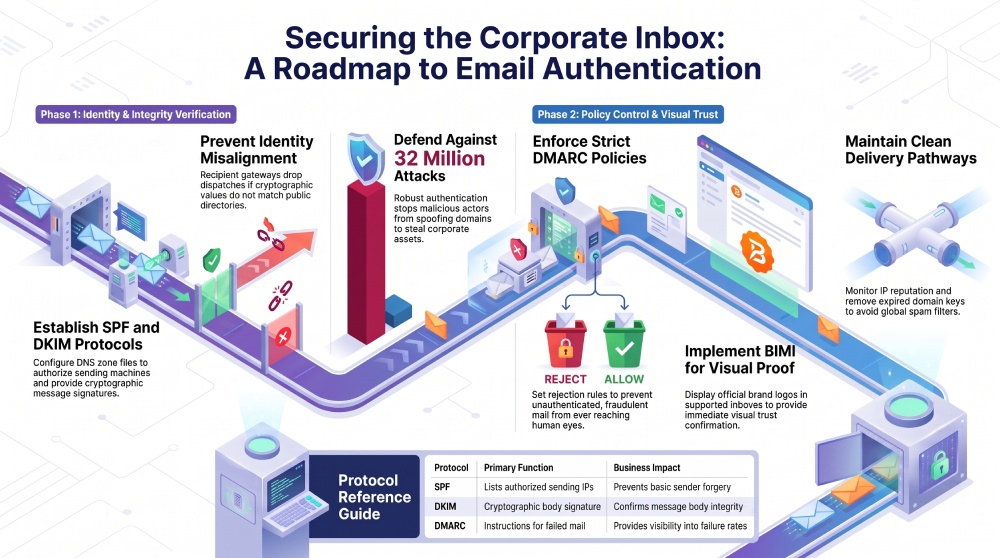
Spoofing attacks target commercial mailboxes daily. When malicious actors spoof company domains, organizations lose assets. According to reports, more than 32 million phishing attacks have occurred worldwide, and almost 1 million new phishing sites are created every quarter. This breakdown offers easy ways to resolve technical issues in external messaging configurations. Having robust email cybersecurity measures in place protects your brand from unauthorized use.
How Email Cybersecurity Protects Corporate Sending Infrastructure
Sending platforms require high inbox delivery rates, which require strict controls. Enterprise IT teams rarely perform baseline configurations on secondary nodes. Unauthorized senders use these open gateways to send malicious code. How does active email cybersecurity protect your network endpoints from exploit attempts?
The key baseline protections for effective infrastructure management are:
- Sending nodes require a special IP space to separate business traffic.
- These are the IPs that receiving networks look at in public identity registries.
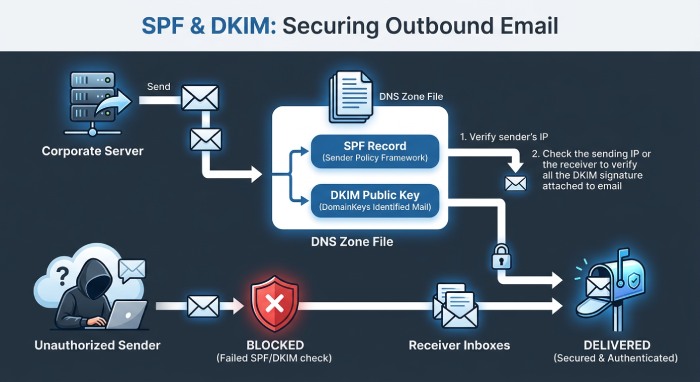 Proper SPF and DKIM configuration is the first step towards establishing identity verification. These text entries are contained within your public DNS zone file.
- The first entry identifies the dispatch machines authorized to send messages for your firm.
- The second entry is a cryptographic signature on each message body sent.
They work together to stop the basic forgery of each dispatch. You can check your current records for errors by verifying them with SPF.
If validation checks fail entirely, then the receiving endpoints will drop the dispatches. Rogue actors easily duplicate sender names without these cryptographic checks. Unauthenticated notes sent out by corporate systems quickly damage brand reputation. IT administrators can avoid such drops by permanently locking down DNS zones.
Structural Verification Procedures for Technical Teams
Routine posture evaluations help organizations minimize operational risk. It is important for enterprise personnel to know how inbound gatekeepers assess incoming dispatches. Each receiving platform will look at several verification tables before allowing a message to reach the user’s inbox. These settings are checked and validated to avoid delivery interruptions.
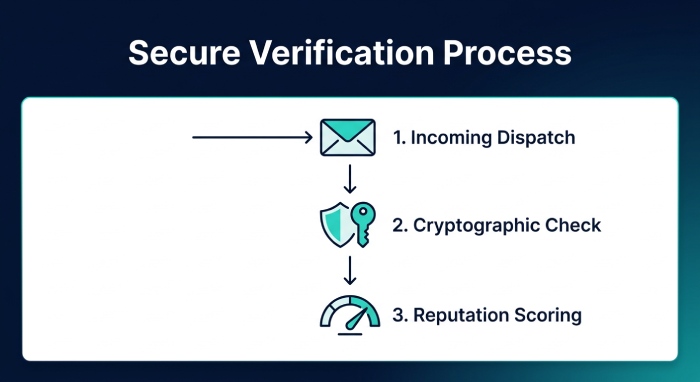 To ensure robust email cybersecurity, one must understand these sequence stages:
- The recipient gateway retrieves cryptographic instructions from public directories.
- The verification node analyzes the signature values to confirm identity alignment.
If these checks do not match, destination platforms lower your dispatch identity’s reputation score. This degradation can have a significant long-term effect on normal product communications. By tracking consistently, unexpected delivery blocks will not affect regular brand dispatches. Businesses uphold trust by enforcing these protocols as technical standards.
Sophisticated Email Cybersecurity Strategies for Business Networks
Advanced policy control mechanisms are required to go beyond simple verification. Organizations need to keep track of what happens to unauthorized notes when they are received from outside the organization. Full email cybersecurity requires actively managing your entire email environment. Misconfigurations are prevented from activating global spam filters by active oversight.
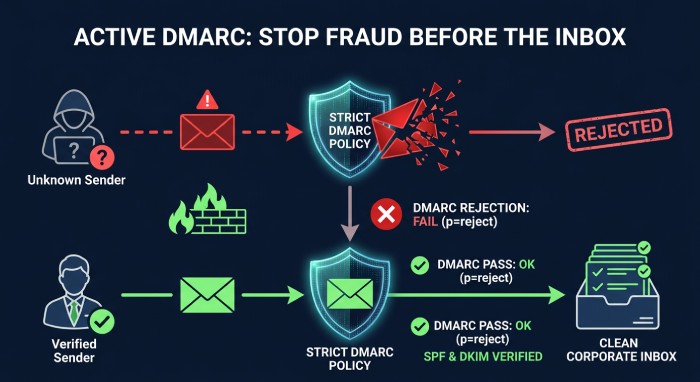
To protect the business, it is critical to enforce the DMARC policy across all subdomains. This rule specifies how to handle unauthenticated mail for receiving networks. Administrators can select two modes of monitoring and a complete rejection policy. A strict rejection setting prevents fraudulent dispatches from being seen by humans. Active DMARC protection tools provide visibility into delivery failure rates across global networks.
Ensuring Maximum Identity Protection and Visual Trust Signs
Recipient companies can have further trust through visual verification. Organizations achieve this visual proof through formal BIM implementation. This structure shows your official brand logo right in the supported consumer mailboxes. It’s a visual indication that the message has passed all required cryptographic tests. It gives immediate visual confirmation to concerned recipients.
Continuous monitoring of sender IP reputation is essential to clean delivery pathways. Your email recipients mark your emails as spam, and ISPs see how many of them do. If you get too low, big platforms ban your sending machines altogether. Automated tools monitor blocklists and notify administrators when there is a sudden drop in reputation.
Regularly monitoring offers tangible benefits for inbox placement optimization. Marketing teams want to be sure that corporate communications don’t get lost in spam folders. At the same time, IT staff members are busy defending against spoofing and impersonation to safeguard executives. These two aspects ensure that legitimate mail reaches its destination and that malicious copies do not.
Technical Network Nodes and Proxy Settings for Administrators
Enterprise infrastructure teams often use specialized nodes to safely handle external scraping tasks. For instance, if you want to monitor public mail blocklists, you need the same external queries to come from the same place. Often, administrators use dedicated proxies to process these administrative requests. This configuration helps to distinguish regular commercial mail traffic from regular diagnostic scanning operations.
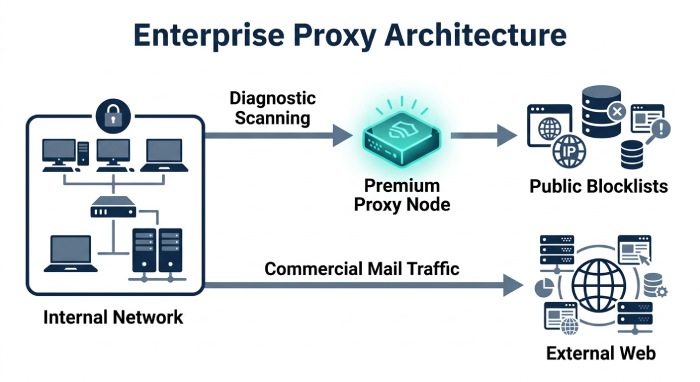 The choice of the right type of proxy servers depends on the operational architecture you select. Some configurations use rotating nodes, and others require static addresses. If you’re using public repositories to pull blocklist intelligence, consistency is required. IT teams use a premium proxy to ensure reliable connections when performing diagnostic activities. This practice helps prevent internal local networks from being exposed during public infrastructure scans.
Maintenance Routines for Outbound Sending Platforms
All technical mail assets need to be maintained regularly for long-term reliability. As businesses evolve and embrace new marketing channels, so does their operational infrastructure. Regular email cybersecurity measures prevent old records from becoming significant vulnerabilities. Expired domain keys are identified during routine audits before they can cause delivery failures.
There is a need for DNS record hygiene to maintain clean server zones. When a server is inactive, it opens up opportunities for malicious subdomain takeover attacks. Tracking codes and server records need to be removed from the system every quarter by IT staff. Clean zone files minimize lookup errors and avoid authorization conflicts when verifying.
 Purchase receipts, for example, require different protection. Strategic transactional email hardening separates high-volume automated notes from outbound email. These streams are separated to ensure that if a user complains about spam from automated mail, it does not affect their ability to receive standard employee mail.
When implementing new outbound messaging systems, it’s important to use email warm-up strategies. Thousands of notes from a new IP address instantly activate automatic spam filters. It takes time to establish positive reputation scores with receiving platforms, and this process needs to be done gradually over several weeks.
All corporate nodes should require TLS encryption for SMTP during transmission. This protocol encrypts the data it carries as it passes through the public internet. Encrypted channels keep malicious parties from intercepting sensitive brand mail between mail servers. This protection is still a fundamental part of today’s email cybersecurity programs.
Final Steps
Business cybersecurity demands continuous monitoring and proper technical setups. Companies can protect their brand assets by implementing authentication measures and monitoring server performance. Now is the time to check your technical settings and prevent spoofing from damaging your operation.
General Manager
General Manager at DuoCircle. Product strategy and commercial lead across the email security portfolio.
Secure your email infrastructure
Protect, authenticate, and deliver. Contact our team to find the right solution.