Essential Digital Solutions for Modern Business Management

Quick Answer
What are the essential digital solutions for modern business management? They include document management, communication tools, QR codes, content verification, data security, and workflow automation to improve efficiency, collaboration, and business growth.
Modern businesses rely on technology to manage operations, communicate with customers, organize documents, and protect information. As organizations grow, completing these responsibilities manually can become time-consuming and inefficient. Digital solutions help companies simplify routine tasks, improve collaboration, and use resources more effectively.
However, successful digital transformation requires more than adopting new applications. Businesses must identify their specific needs, select suitable solutions, and integrate them into existing workflows. From document management to digital communication and content verification, the right technologies can support productivity and long-term growth.
1. Simplifying Administrative Tasks
Administrative responsibilities are essential to business operations, but paperwork and manual coordination can consume valuable time. Preparing documents, organizing records, and managing approvals are common activities that benefit from digital solutions.
Document management software allows teams to store files systematically, retrieve information quickly, and share documents securely. Digital templates also reduce repetitive work by providing standardized formats for frequently used paperwork.
Businesses handling agreements, property transactions, or authorization requirements may find resources such as a general power of attorney form useful when preparing documents involving legal representation. These resources can help individuals understand common documentation requirements. However, the appropriate document and its validity depend on the circumstances and applicable laws.
Companies should establish procedures for reviewing, approving, and storing important records. Access controls, version tracking, and secure backups help prevent mistakes and ensure employees use accurate information.
2. Improving Communication Across Teams
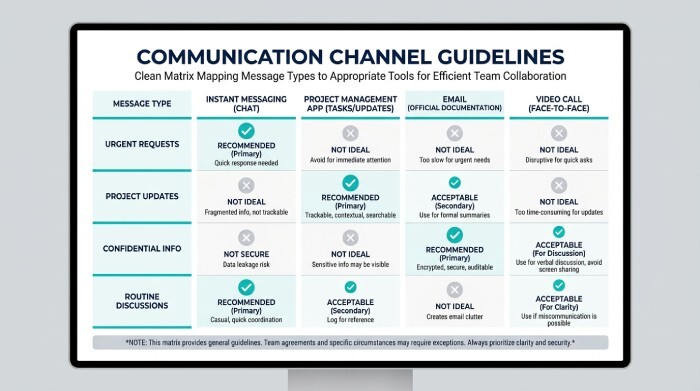 Effective communication supports nearly every aspect of business management. Employees exchange information, customers expect timely responses, and managers need to ensure important updates reach the appropriate people.
Email, instant messaging, video conferencing, and project management applications make collaboration easier, particularly when employees work remotely. These solutions reduce unnecessary meetings and allow colleagues to access information without repeatedly contacting one another.
Businesses can improve communication by choosing applications that integrate with existing systems. Connecting customer relationship management software with email or support platforms, for example, helps teams maintain consistent records of customer interactions.
Clear communication guidelines are equally important. Employees should understand which channels to use for urgent requests, project updates, confidential information, and routine discussions. Establishing these expectations prevents important messages from getting lost among unrelated notifications.
3. Making Information Sharing Easier
Customers increasingly expect convenient access to business information. Complicated instructions, lengthy website addresses, and difficult navigation can discourage people from completing simple tasks.
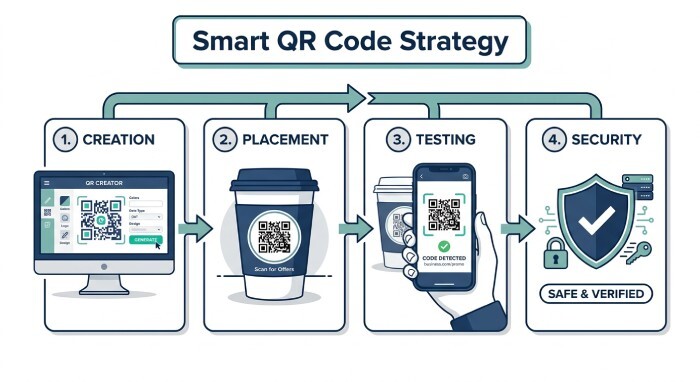
QR codes provide a practical connection between physical materials and digital resources. Businesses can include them on packaging, brochures, receipts, menus, event materials, and office signage. Scanning a code with a compatible smartphone can direct customers to websites, contact details, registration forms, or product information.
A qr code maker can simplify the creation of codes for different business purposes. Depending on its features, users may customize the appearance, choose a destination, and download the finished code for printed or digital materials.
Before distributing a code, businesses should test it on different devices and confirm that its destination works correctly. The linked page should load quickly, display properly on mobile devices, and explain the next steps clearly.
Security also deserves attention. Organizations should inspect publicly displayed codes regularly and ensure customers are directed toward trustworthy websites.
4. Maintaining Trust in Digital Content
Digital content has become central to marketing, communication, and customer engagement. Businesses regularly publish photographs, illustrations, advertisements, and promotional materials across websites and social media channels.
Artificial intelligence has made visual content creation faster and more accessible. Although AI-generated images offer creative opportunities, they can also introduce challenges when viewers cannot distinguish synthetic visuals from authentic photographs.
An AI image detector can help assess whether an image may have been generated or modified using artificial intelligence. These applications analyze visual characteristics and provide predictions based on their detection methods.
However, detection results are not definitive proof. Some tools incorrectly classify genuine photographs, while sophisticated synthetic images may avoid detection. Businesses should therefore combine automated analysis with human review, source verification, and contextual evidence before making important decisions.
Organizations can also establish policies explaining when AI-generated visuals are acceptable, whether disclosure is appropriate, and how employees should handle copyrighted or confidential materials. These guidelines help maintain transparency and protect brand credibility.
5. Strengthening Data Security
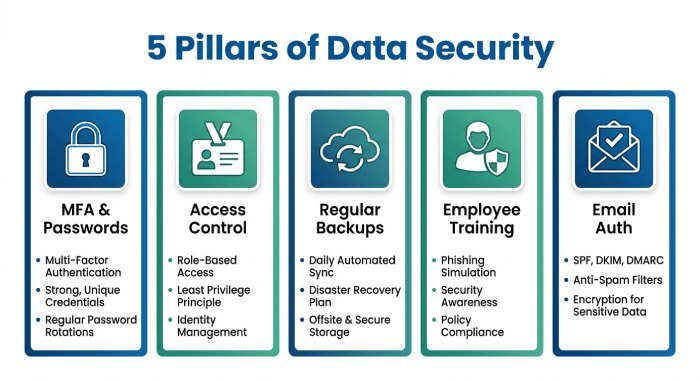
Digital transformation introduces important security responsibilities. Businesses often store customer records, financial information, employee details, contracts, and other sensitive data across multiple systems.
Weak passwords, excessive permissions, outdated software, and suspicious downloads can expose organizations to unnecessary risks. A practical security strategy combines appropriate technology with employee awareness.
Multi-factor authentication adds another layer of account protection. Password managers help employees maintain unique credentials, while software updates address known vulnerabilities. Access permissions should reflect job responsibilities, preventing unnecessary exposure of confidential information.
Companies should maintain reliable backups and test recovery procedures regularly. Backups are valuable only when important information can be restored successfully after accidental deletion, equipment failure, or a security incident.
Employee training further strengthens protection. Staff members should learn to recognize suspicious emails, unsafe links, unexpected attachments, and unusual requests for confidential information.
Businesses can further strengthen email security by using DuoCircle to manage SPF, DKIM, and DMARC email authentication. These protocols help verify sender identities, reduce email spoofing and phishing risks, and improve email deliverability.
6. Automating Repetitive Workflows
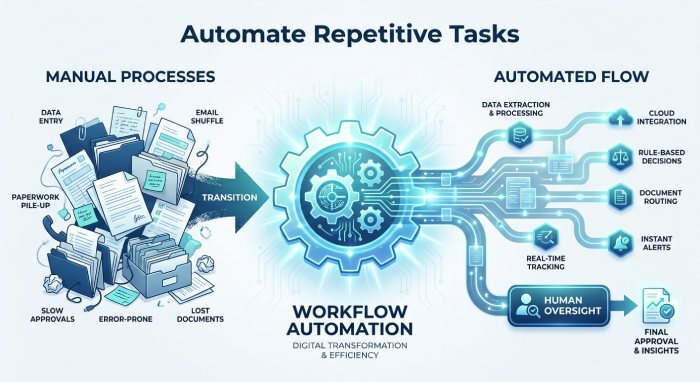
Automation allows businesses to reduce repetitive tasks and maintain consistent processes. Activities such as sending reminders, updating records, assigning tasks, and generating reports can often be automated through workflow applications.
For example, a customer service system might automatically assign incoming inquiries to the appropriate department. Another workflow could notify a manager when an approval is required or remind employees about approaching deadlines.
Before introducing automation, organizations should evaluate existing procedures. Automating an inefficient process may simply reproduce existing problems more quickly. Simplifying the workflow first usually creates better opportunities for improvement.
Businesses should also monitor automated processes to identify errors, outdated rules, and unexpected outcomes. Human oversight remains essential when tasks involve financial decisions, confidential information, or important customer commitments.
7. Selecting Suitable Digital Solutions
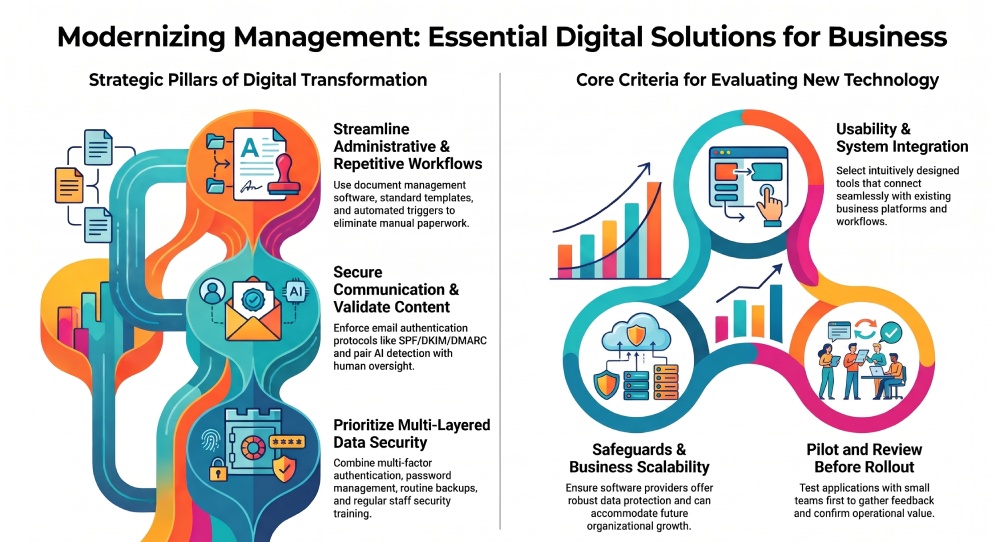
Choosing suitable technology can be challenging because businesses have access to numerous applications. Instead of adopting every popular solution, managers should identify operational problems and evaluate which technologies address them effectively.
Several factors deserve consideration when comparing options.
- Ease of use: Employees should learn the application without extensive training.
- Integration: The solution should work with existing software whenever possible.
- Security: Providers should offer safeguards appropriate for the information being handled.
- Scalability: The application should accommodate changing business requirements as the organization grows.
- Cost: Subscription fees, implementation expenses, and maintenance should fit the available budget.
- Customer support: Helpful documentation and reliable assistance make troubleshooting easier.
Testing a solution with a small team before organization-wide implementation can reveal limitations. Employee feedback also helps managers determine whether an application genuinely improves productivity.
Businesses should periodically review their technology investments. Removing redundant applications, updating outdated systems, and improving existing workflows can produce meaningful savings without requiring additional spending.
Conclusion
Digital solutions play an important role in modern business management. They help organizations streamline administration, improve communication, share information conveniently, evaluate digital content, strengthen security, and automate repetitive responsibilities.
The most effective approach begins with clearly defined objectives. Businesses should select technology according to their operational requirements, train employees properly, and evaluate results regularly.
Combining appropriate applications with sound management practices enables organizations to improve efficiency without introducing unnecessary complexity. Ultimately, successful digital transformation is not measured by the number of applications a company adopts. It depends on how effectively technology helps employees collaborate, solve problems, protect information, and deliver greater value to customers.
Topics
General Manager
General Manager at DuoCircle. Product strategy and commercial lead across the email security portfolio.
Secure your email infrastructure
Protect, authenticate, and deliver. Contact our team to find the right solution.