

BlackBerry stages epic comeback, OpenAI model faces threats, La Sapienza suffers ransomware – Cybersecurity News [February 2, 2026]
Last week was replete with cybersecurity issues, which made it quite chaotic for critical infrastructure like pipeline operators and universities. While one of the biggest European Universities still remains offline following a cyberattack, BlackBerry is eventually making a comeback as a cybersecurity solution. Meanwhile, Conpet, a Romanian oil pipeline operator, was targeted by a group of threat actors. OpenAI is also grabbing attention because of its new model, which is suspected to be full of cybersecurity vulnerabilities.
BlackBerry’s major comeback in a new avatar!
BlackBerry was extremely popular, especially among corporate professionals, as a sturdy, efficient QWERTY keypad phone. However, the surge in touchscreen smartphones gradually pushed BlackBerry out of the market. But BlackBerry decided to reinvent itself and managed to stay relevant.

BlackBerry is no longer a public-oriented brand. Rather, it has become a smart cybersecurity solutions brand that focuses on cybersecurity and the Internet of Things. The Canadian brand has always believed in trust, security, and innovation. That’s exactly what it has been doing to date. BlackBerry decided to let go of its hardware business (the handsets) and decided to focus on the software business (cybersecurity software).
BlackBerry currently addresses two areas: secure communication and QNX. The latter is a real-time operating system designed for automobiles. QNX software is meant for safety-based functions like braking, infotainment systems, and so on. To secure communications, BlackBerry offers classified-level encryption and end-to-end encryption services for video, voice, and data.
BlackBerry works with the German government, UK-based banks, the Ministry of Defence, and other senior officials.
BlackBerry uses AI very carefully, given the nature of its services. It uses artificial intelligence only when it considers AI a reliable and safe solution.
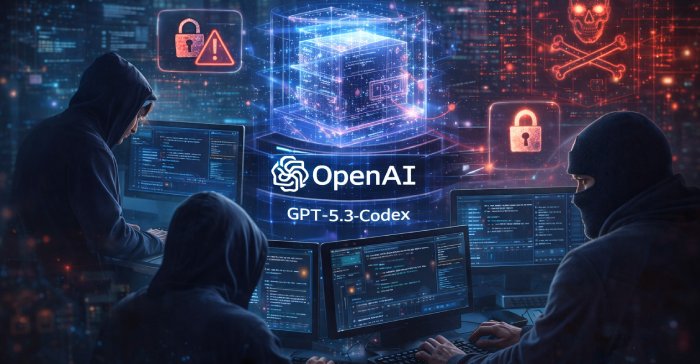
OpenAI’s new model may be prone to threat attacks!
OpenAI’s new model, GPT-5.3-Codex, is definitely gaining an edge over its competitors. But the same model is also vulnerable to cyber risks. GPT-5.3- Codex’s abilities make it an advanced tool for threat attackers.
Paid ChatGPT users can easily access this new OpenAI model for software development activities like debugging, writing, and code testing. But the model does come with restricted uses since OpenAI is also aware of the lurking cybersecurity concerns.
OpenAI is currently “taking a precautionary approach and deploying our most comprehensive cybersecurity safety stack to date.” They are taking mitigation measures such as trusted access for advanced capabilities, safety training, and automated monitoring.
The CEO, Sam Altman, believes that this new model can actually lead to a real-world cyber threat if it gets automated. According to the “Preparedness Framework,” OpenAI is not allowed to release any “high” risk model before equipping it with mitigation features.
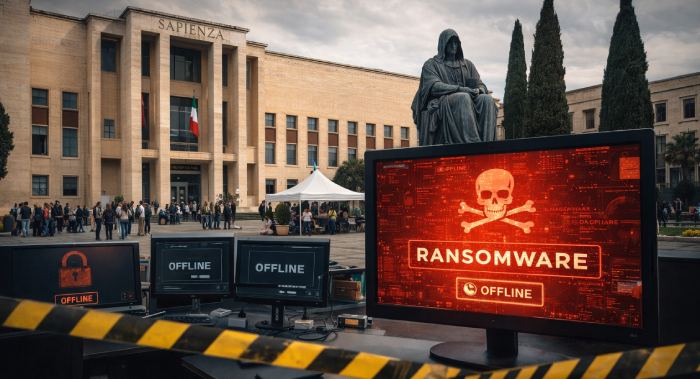
La Sapienza has gone offline after an alleged ransomware attack!
La Sapienza, one of the largest universities in Europe, has gone offline following a ransomware attack. It is located in Rome and has a student body of approximately 120,000. The systems have been down for 3 days now.
The educational institute went offline to limit the extent of damage. Investigations are underway, and they are trying to restore all the virtual services for the convenience of the students. As of now, workstations and email services can be “partially limited.”
La Sapienza also confirmed that the backups have not been compromised. So they can be used to restore the systems. The official website of the University is still down.
According to the report of an Italian news outlet, the disruption happened because of a ransomware attack. However, the school authorities have been quite tight-lipped about the type of threat. The report states that hackers have already sent a ransom demand to the University and set a 72-hour deadline.
The cyber mishap could not disrupt the examination process. However, students are not able to sign up online to sit for the exams. To do so, they need to get in touch directly with the professors. Multiple infopoints have also been set up by the authorities across the campus to keep the students well-acquainted with the ongoing situation.
Experts have noticed a pattern in these cyberattacks. Educational institutes are increasingly becoming a favorite point of target for cybercrooks. In 2025, something similar happened to Harvard University and the University of Pennsylvania. Cyber experts believe that the main reason behind this is the extent of vulnerability involved.
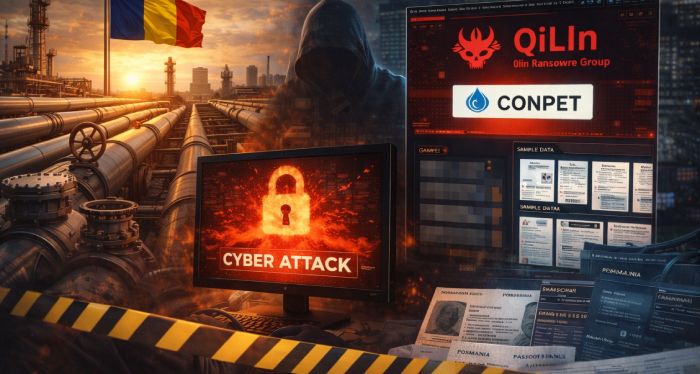
Romanian oil pipeline operator targeted by cybercrooks!
Conpet, the national oil pipeline operator for Romania, was targeted by threat actors last Tuesday. They shared a press release on Wednesday, stating the company’s IT infrastructure was compromised because of the cyber incident. However, the cyberattack could not impact Conpet’s daily operations and contractual obligations.
The official website of Conpet was taken down due to a cyber incident. An investigation is underway. National cybersecurity agencies are trying their best to nab the culprits and restore the systems.
Conpet is responsible for supplying imported and domestic crude oil and derivatives across a 4000-kilometre network.
The Qilin ransomware group has claimed responsibility for the cyberattack on Conpet. To make their claim trustworthy, Conpet’s name has been added to a dark web leak site, among other compromised brand names. Qilin claims to have stolen almost 1TB worth of data. To prove their claim, they have also made some sensitive data public. This data includes passport scans, internal documents, and financial data.
Over the last 4 years, Qilin has claimed to attack more than 400 organizations. Their target list includes names like Asahi, Nissin, Synnovis, and Australia’s Court Services Victoria, among others.
The cyberattack on Conpet was preceded by two other major threat attacks on the critical infrastructure of Romania- the Romanian water management authority and Oltenia Energy Complex.
In February 2024, 100 Romanian hospitals were forced to go offline by a Backmydata ransomware attack. In December 2024, a Lynx ransomware attack targeted Electrica Group, one of the renowned electricity suppliers and distributors in Romania.