

VMC vs CMC explained: Which logo certificate should you choose?
Displaying your brand logo in the inbox is becoming an important part of email trust and recognition. With BIMI, businesses can make their emails more identifiable, but this requires choosing the right certificate. This is where VMC and CMC come in. While both allow your logo to appear in supported inboxes, they differ in terms of requirements, cost, and the level of trust they offer.
If you are unsure which one is right for your domain, the decision usually depends on factors like trademark availability, business goals, and timelines. In this guide, we explain the differences between VMC and CMC in simple terms so you can choose the certificate that best fits your needs.
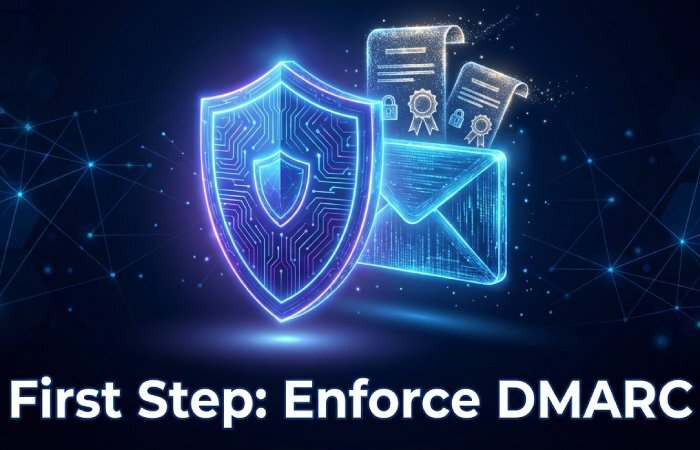
SPF, DKIM, and DMARC form the foundation of email security, ensuring your domain is authenticated and trusted before BIMI can display your verified brand logo in inboxes.
What is a VMC (Verified Mark Certificate)
A VMC is a high-assurance digital certificate that verifies a brand’s ownership of the logo it displays in emails. It is the original certificate type introduced with the BIMI standard and is designed to give brands a verified visual identity inside the inbox.
At its core, a VMC connects your official, trademarked logo to your domain. Once issued, it allows email providers to confidently display the logo next to your messages, helping recipients instantly recognize the email as legitimate.
How VMC works with BIMI
A VMC works alongside BIMI to enable logo display in supported inboxes. Here is the flow in simple terms:
- You publish a BIMI record in your DNS
- Your domain enforces DMARC (p=quarantine or reject)
- Your VMC acts as proof that the logo in your BIMI record is legally yours
When all these checks align, mailbox providers like Gmail can safely display your brand logo next to your emails.
Typical users
VMCs are best suited for established brands that:
- Have a registered trademark
- Send high volumes of customer-facing emails
- Want maximum brand visibility and trust in the inbox
Large enterprises and well-known companies often adopt VMCs to protect their reputation, improve email engagement, and create a consistent branded experience across communication channels.
In short, a VMC is not just about showing a logo. It is about proving ownership, building trust, and standing out in crowded inboxes.
What is a CMC
A Common Mark Certificates (CMC) is a digital certificate that allows brands to display their logo in email inboxes without needing a registered trademark. It was introduced as a more accessible alternative to VMC, making BIMI adoption easier for startups and growing businesses.
At its core, a CMC still verifies that you control the domain and the logo you are using, but it does not require legal trademark ownership. This lowers the barrier to entry while still enabling visual brand presence in emails.
How CMC works with BIMI
A CMC works with BIMI in a similar way to a VMC, with a slightly lighter validation layer:
- You publish a BIMI record in your DNS
- Your domain enforces DMARC (p=quarantine or reject)
- The CMC verifies your right to use the logo
Once these checks pass, supported email providers can display your logo next to your messages, helping improve recognition and trust.
Typical users
CMCs are best suited for growing businesses that:
- Do not yet have a registered trademark
- Want to adopt BIMI early
- Are focused on improving brand visibility and email engagement
For many companies, a CMC acts as a stepping stone. You can start building brand recognition now and upgrade to a VMC later once your trademark is secured. In short, a CMC gives you a practical way to get your logo into inboxes faster, without waiting on legal processes, while still strengthening trust and recognition.
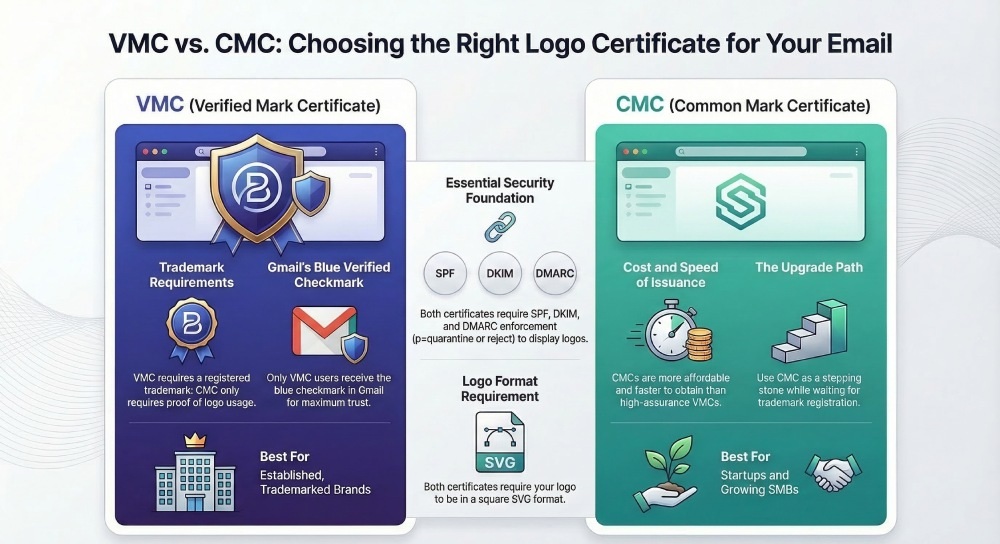
Key differences between VMC and CMC
At first glance, CMC and VMC look quite similar, but there are a few important differences that affect cost, setup time, and how your brand appears in the inbox.
Trademark and verification
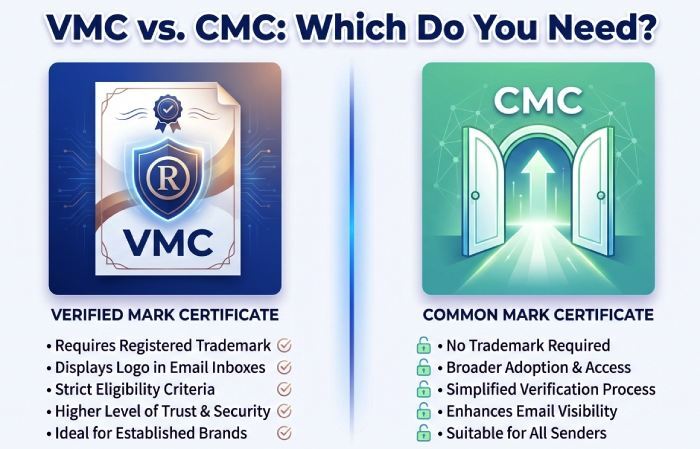
The biggest difference is the trademark requirement. A VMC needs a registered trademark for your logo, so the verification process is more detailed and strict. The certificate authority checks your legal documents to confirm ownership.
A CMC does not require a trademark. Instead, it verifies that you own the domain and are genuinely using the logo. This makes the process simpler and more accessible.
Logo display and trust signals
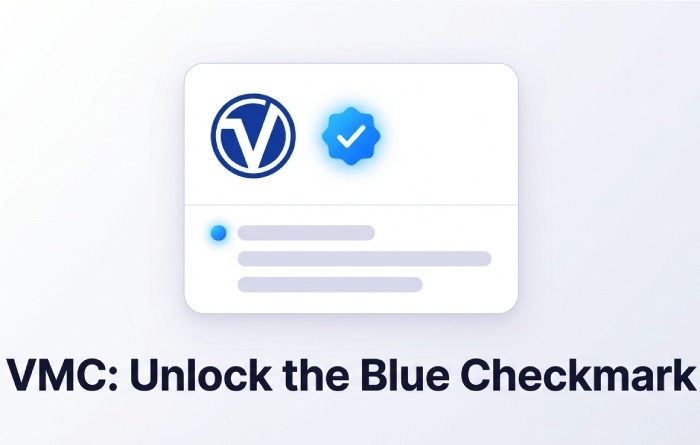
Both certificates allow your logo to appear in email inboxes, which helps people recognize your brand quickly. However, VMC has an extra benefit in Gmail. It shows your logo alongside a blue verified checkmark, indicating a highly trusted sender. CMC only shows the logo, without the checkmark.
Platform support
VMCs are supported by more email providers, so your logo is more likely to appear across different inboxes. CMC support is still growing and currently works with fewer platforms.
Cost and time
VMCs are more expensive and take longer because of strict verification and trademark checks.
CMCs are faster and more affordable, making them easier to get started with.
Here’s a quick comparison table between the two certification methods:
| Feature | VMC (Verified Mark Certificate) | CMC (Common Mark Certificate) |
| Trademark Required | Yes, mandatory | No, not required |
| Validation Level | Strict, legal + technical verification | Moderate, mainly technical verification |
| Logo Ownership Proof | Trademark registration proof | Proof of logo usage |
| Gmail Blue Checkmark | Yes | No |
| Logo Display | Yes (stronger trust signal) | Yes (without verified badge) |
| Cost | Higher | Lower |
| Issuance Time | Longer (due to manual legal checks) | Faster |
| Accessibility | Limited to trademarked brands | Open to most businesses |
| Best For | Established brands | Startups & SMBs |
| Upgrade Path | Not needed | Can upgrade to VMC later |

Which certificate is more suitable for your domain
Choosing between a VMC and a CMC depends on where your business stands today and what you want to achieve with your email branding. Before deciding, it helps to look at both your legal status and your marketing goals.
First, check your trademark status. If your logo is officially registered with a national authority, going for a VMC makes the most sense. It gives you full BIMI benefits, including the Gmail blue checkmark, and presents your brand as highly credible and verified. If you do not have a trademark yet, a CMC is a practical way to still get your logo displayed in inboxes.
Next, think about your goals. If having that blue verified checkmark is important for brand trust and visibility, VMC is your only option. But if your goal is simply to show your logo and improve recognition, CMC does the job well.
You should also consider timelines. VMCs take longer because of detailed manual verification, while CMCs are quicker to obtain, making them ideal for fast campaigns or launches.
No matter what you choose, make sure your DMARC policy is set to quarantine or reject, or your logo will not appear at all.
How can you avail a VMC certificate
Getting a VMC takes a few clear steps, but it does require some preparation:
- Register your trademark: Your logo must be officially registered with a government authority (e.g., the USPTO or a similar agency). Without this, you cannot get a VMC.
- Prepare your logo in SVG format: Convert your logo into a square SVG file (BIMI requires this format). SVG ensures your logo looks sharp in all inboxes.
- Set up DMARC enforcement: Your domain must have DMARC set to p=quarantine or p=reject. Without this, your logo will not display.
- Apply through a certificate authority (CA): Choose a trusted provider like DigiCert or Entrust. They will review your trademark and business details before issuing the certificate.
How can you avail a CMC certificate
The process for CMC is similar, but simpler because no trademark is needed:
- Prepare your logo: Your logo should be in SVG Tiny 1.2 format. It does not need to be trademarked, but it should be actively used by your brand.
- Make sure DMARC is enforced: Just like VMC, your DMARC policy must be set to quarantine or reject.
- Apply via a certificate authority: Submit your request through a trusted CA. You may need to verify your identity through documents or a quick video check.
CMC is faster and easier to get, making it a great starting point if you are not ready for a VMC yet.