A practical guide on checking your email health

Quick Answer
An email health check is a systematic audit of your sending domain's authentication, deliverability, and abuse exposure. Verify SPF, DKIM, and DMARC are configured and aligned, review DMARC aggregate reports for unexpected senders, check blocklists, and confirm reverse DNS and TLS are in place.
A practical guide on checking your email health
No matter how advanced technology has become, email is still the backbone of business communication. That’s precisely why it is one of the most targeted and abused attack surfaces online. For any business organization, it is important to understand that poor email deliverability, phishing, and domain impersonation, all these issues stem from one major problem: an unhealthy email ecosystem.
This is where an email health check plays a critical role! Do not think of it as just a deliverability audit. Besides email deliverability, an email health check should also be considered as an all-encompassing assessment of your business domain’s capability to send authorized emails safely and at scale, without ending up in spam folders or being compromised by threat actors. This blog will help you understand the whys, whats, and hows of an email health check.
What is an email health check?
It is a strategised, systematic, and preventive security analysis of your email-sending ecosystem. It makes sure that:
- Your domain is secure and authenticated to send legitimate emails.
- Your emails pass the trust check of email service providers.
- Your email landscape is not prone to phishing or spoofing attacks.
- Your customers trust your emails.
- Your emails reach the recipients’ inboxes safely.
Why does it matter for your business?
A poor email health setup not only impacts the marketing game by hampering deliverability but also makes your brand vulnerable to phishing campaigns, impersonation threats, and damage to its domain reputation. This hits especially hard for teams running cold outreach campaigns, where a damaged sender reputation can tank response rates just as fast as a bad list. It’s worth reading a Skylead review before pairing your email health practices with an outreach tool. From spam blocklisting, brand trust damage, to compliance risks and revenue loss, an unhealthy email ecosystem can hamper your brand in ways you can’t even imagine!
How to check email health
Here’s a detailed step-by-step email check process that will save you from unnecessary deliverability issues, authentication failures, and malicious attacks:
Audit email authentication
The very first thing you must check is whether or not your domain is properly authenticated. SPF, DKIM, and DMARC authentication checks ensure that the email service providers your emails are authorized with are safe. Remember, the first step is to ensure that your email setup is SPF, DKIM, and DMARC enabled.
Analyze the DMARC reports
Configuration is equally important. Make sure that your email authentication protocols are configured correctly. Closely monitor who is sending emails from your domain and whether they are authorized to do so or not. If you see any unexpected senders in the reports, consider it an early indicator of misconfiguration or potential spoofing attempts.

Check the domain and IP reputation
ESPs (email service providers) assign reputation scores based on the behavior and performance of your domain and IP. Keep a check on the following:
- Bounce rates
- Spam complaint rates
- Blacklist status
- Sending consistency
If you notice a sudden drop in reputation, it might be due to messy or cluttered list hygiene or compromised sending sources. To maintain a healthy email ecosystem, streamline sending patterns and keep recipient lists decluttered.
Evaluate email content and technical headers
The structure of your email messages is equally significant when it comes to email health. Review formatting issues, misleading or clickbait subject lines, and broken HTML Poor formatting and malformed headers can make a message look like a phishing email, even though it’s legitimate.
How to maintain good email health over time?
An email health check is a long-term game. Here are some best practices to make sure that your email health stays well-maintained:
Go for monthly audits
Conduct monthly audits to check overall email health. Keep a close eye on aspects such as engagement, authentication, blacklists, etc., to bolster email security and improve deliverability. Regular audits help you maintain a strong reputation over the long term and earn the trust of new customers.
Re-engagement campaigns
Try to win back inactive users before removing them from the lists once and for all. Try tactics such as segmentation, freebies, or customized content to regain their trust. If they still don’t reciprocate, then remove them immediately.
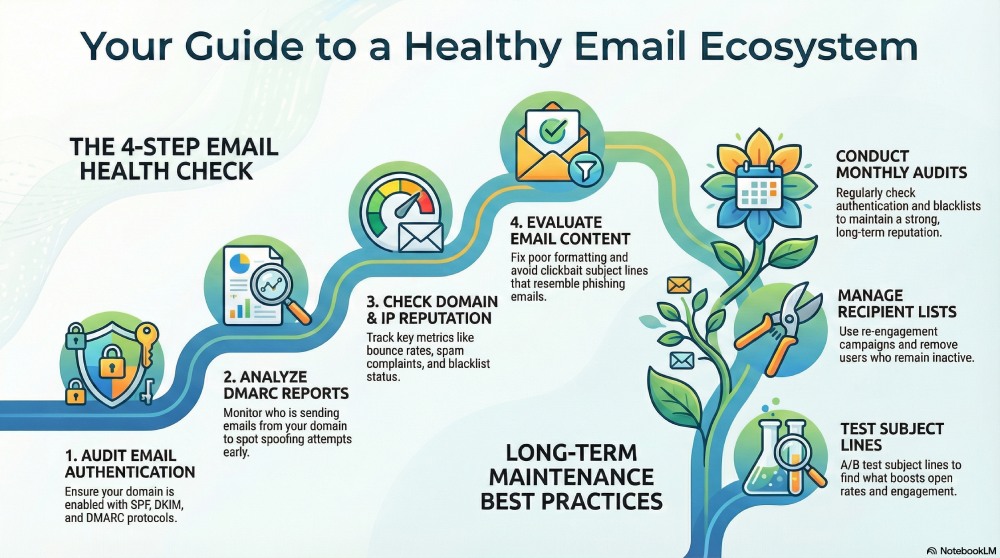
A/B test the subject lines
Experiment with subject lines. A/B test them to find out the ones that boost open rates. The higher the open rates, the better the engagement, and the smoother the deliverability. This also contributes to a better reputation.
Wrapping up!
A healthy email ecosystem can be built by persistent monitoring, content integrity, and successful authentication. An email health check is no longer a luxury, but rather a fundamental cybersecurity practice.
Topics
General Manager
General Manager at DuoCircle. Product strategy and commercial lead across the email security portfolio.
Secure your email infrastructure
Protect, authenticate, and deliver. Contact our team to find the right solution.