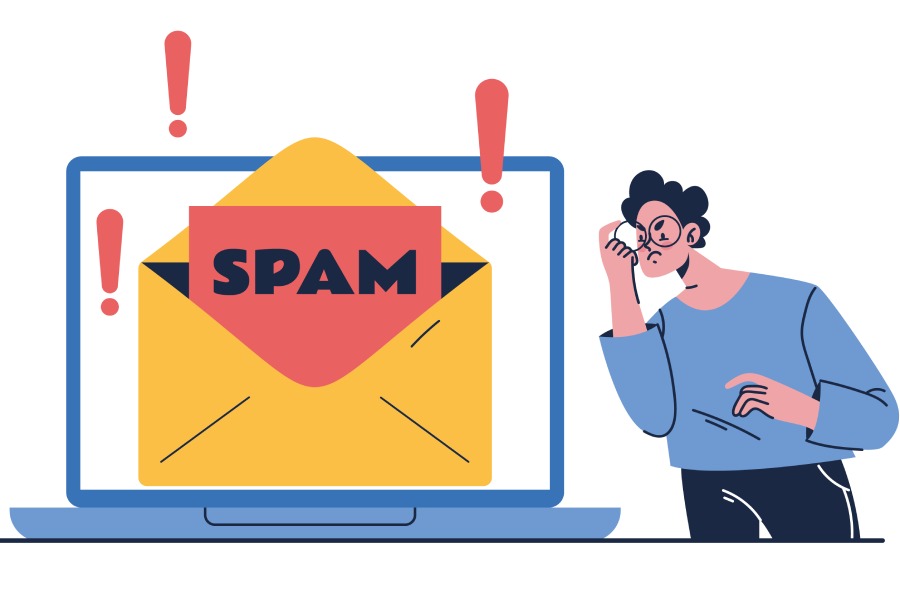
The concept of ‘Email Blast’ is the cornerstone of Email Marketing. It is a phrase that relates to the act of shooting a single email message (which is generally a promotional message informing the recipients about a new product or offer) to addresses on huge email lists concurrently. Despite email blasts being helpful and time-efficient, lack of competent strategic planning makes it a risky activity at times. How can a promotional email regarding a dieting offer appear appealing to a client who is a big-time food-lover and is always hunting for attractive food offers? Such blunders often occur, and that is where you need to reframe your thinking process and change the strategies.
Today, we are in the digital age, where advanced technology makes everything easier. The advantage digitalization offers to organizations is especially remarkable. Organizations like banks that had to deal with millions of people and billions of transactions daily can now manage a large proportion of their customers online. As a result, online banking is gaining in popularity, thanks in part to the convenience it accords the customers.
The cyber headlines are once again crowded with news of attacks, patches, mergers, and data theft. Here are the top global cybersecurity updates of this week to help you keep abreast of the latest happenings in the cyber world so you can learn from the mistakes of others and adopt cybersecurity practices in advance and keep your critical data from falling into the hands of cyber adversaries.
A 2020 study revealed that email is a major cloud attack vector in the corporate world. Organizations of various sizes and specializations are threatened daily with spam, malicious emails, and emails containing malicious links. Such attacks are successful because it is easy to entice humans to click links and open attachments without due diligence. This makes it the easiest way to breach an organization’s security infrastructure.
Microsoft is making some changes to harden the configuration for emails relayed or forwarded through Office 365 SMTP server(s).
Starting July 27, 2021, they will be updating Special Relay Pools – a separate IP address pool used for relayed or forwarded emails sent from domains that do not come under accepted domains in your tenant. Till July 26, 2021, they will be redirecting forwarded and relayed emails from all the domains (including those which do not come under accepted ones). However, the forwarded emails will no longer be directed through special replay pools but Regular Relay Pools (or high-risk delivery pools) after the mentioned date.
This week’s cyber news headlines will have you thinking about whether you are doing enough to ensure cybersecurity for yourself and your organization. From the revival of a ransomware strain to attacks caused by ignorance, here are the top cyberattack news updates from across the globe.
The good news for MSPs is that there has never been a tremendous demand for regulatory knowledge as it is today. Market research reported that global managed service offerings spending would grow to more than $296 billion by 2023.
Regulatory compliance has been an abstract idea rather than a foundational concept for most MSPs. These matters have only been heard of in MSP conferences, summits, and forums. However, they are now gaining significance among clients.
The digital age has witnessed emails emerge as one of the most original and popular methods for online correspondence. Regardless of the size of an enterprise, email security continues to be a concern. In 2017, the number of email users across the globe was around 3.7 billion. This figure is likely to rise to 4.3 billion by 2022. Besides, malicious actors have close to 300 billion emails dispatched around cyberspace to target each day. Without a robust line of defense, an organization would always be in the shadow of an attack from adversaries. Phishing attempts, ransomware attacks, malicious attachments, and links continue to exploit the vulnerabilities.
You may be familiar with a few cyberattack strategies that the adversaries usually employ; however, if you haven’t been following current trends, you would be surprised by how innovative threat actors have become and the sophisticated methodologies they use to rob you of your credentials. Targeted phishing attacks and customized attack schemes make it difficult to stay safe on the web without using robust cybersecurity tools. Here are this week’s latest security updates which help you learn more.
With the rampaging virus and a restriction on movement, most staff have started to work from home. While this change has led to a successful fight against the virus, it has given IT Security teams a lot to work on. A widespread workforce and spread-out security protocols have led to systems and networks becoming increasingly vulnerable to cyber threats like spear-phishing, BEC, etc. Moreover, most enterprises moving to the cloud created an open field for both the victim and the perpetrator.
The dynamic cyber world reports incidents of data theft, vulnerabilities in applications, and other attacks almost every day. But with the right cybersecurity tools, one can stay ahead of threat actors and prevent their confidential information from falling into the wrong hands. To this end, here are the headlines of the latest cyberattacks.
MSPs have been on their toes over the last couple of years, capitalizing on every opportunity that comes along. With the new normal establishing itself after the pandemic, times have been shaky for most service providers. While an MSP might be focusing on the range of its managed service offerings, it’s easy to get busy with technologies. However, the secret to success and better user experience lies not in merely being active but in being productive.
A tremendous evolution can be seen in the internet threat landscape in recent years. Cyber-attacks have become more sophisticated to easily infiltrate an email infrastructure and cripple any organization’s business operations in seconds. The latest Gartner report points out that attacks relating to business email compromise (BEC) will double in number every year (to over $5 billion) by 2023, resulting in substantial financial losses to organizations.
On the one hand, the COVID 19 pandemic has made Work-from-Home the new normal, allowing organizations worldwide to work efficiently and continue their business operations. On the other hand, it has given cyber adversaries a field day as working at home has made employees let their guard down when it comes to adopting cyber hygiene. The shift from offline to cloud-based exchange of confidential data has made data accessible to both employees and attackers.
The digital transformation amidst the pandemic has significantly diversified managed service offerings of leading MSPs. While a group of forward-thinking organizations prepared to make this leap involving remote work, others struggled to embrace a strategic plan. Migrating to cloud systems proved to be imperative amidst the new operational models. Among various types of managed services, cloud migration continues to be one of the most sought-after domains.
In recent times, adversaries have started moving away from malware-based email attacks to sophisticated “malware less” methods that can bypass traditional secure email gateways (SEG) and native email security, thus reaching the inbox. A report from FireEye suggests that such social engineering-based attacks, which include spear-phishing and CEO fraud, constitute over 90% of all email threats. The evolving situation has necessitated the deployment of Post Email Delivery Protection and advanced anti-phishing services.
Transactional emails and marketing emails are the tools inherent with most enterprises today. While transactional emails provide crucial information like receipts or password resets, marketing emails help deliver announcements to large segments of the customer base. Email automation combines the benefits of both transactional and marketing emails.
Cybersecurity is a sensitively dynamic arena. For most security managers and IT admins, to be able to sail through each day without having their organization’s information assets’ attacked by cyber adversaries is nothing less than a challenge! Imagine how challenging it could be for the regular consumers of the internet to keep their PII (Personally Identifiable Information) from falling into the hands of cyber adversaries, who can then use it for various nefarious purposes. This is what makes it crucial to keep yourself updated on the latest cyber news to stay a step ahead of malicious actors and keep your crucial information assets as secure as possible. Here are the latest headlines this week with global updates on cybersecurity.
Email is one of the most preferred modes of communication today. It is fast and most times reaches its recipients safely. Emails are instantaneous by nature, and their efficacy has been proved beyond doubt. Users sent approximately 306.4 billion emails in 2020, and that number is rising steadily at a consistent rate. However, with the increased usage of electronic mail, numerous complications appear. Here, managed services providers assume greater significance as they are responsible for the upkeep of the facility and see to it that the service remains unobstructed and protected for their clients. It has to be ensured since it has a direct bearing on the financial and security stature. It’s one of the different types of managed services that organizations outsource to third parties.
In this hyperactive internet age, no one can wish away digital transformation. Businesses may not be able to adapt to the transition comfortably. MSPs can play their part by helping customers navigate the digital transformation process, connect seamlessly, and work productively.
MSPs should be ready to offer different types of managed services rather than only sticking to helping improve the IT infrastructure. Excellent managed services providers leverage a radical outlook to address the challenges and achieve the objectives in a changing digital landscape.